Are Greens Powders a Waste of Money? An Honest Answer
When a greens powder is a waste of money, when it's worth it, what the research actually shows, and how to tell a good one from an expensive one.

Greens powders promise a lot: more energy, better digestion, glowing skin, a "detox." Some cost more than $100 a month. So it's fair to ask whether they're worth it at all.
We make a greens powder, Daily Greens & Reds, so we have a stake in the answer. We'll give it to you straight anyway: for some people, a greens powder is a waste of money. For others, it's a useful habit. Here's how to tell which you are. Every claim below comes from a study, a government source or a label, listed at the end.
The short answer
- It's a waste if you expect it to replace vegetables, "detox" you, or change how you feel overnight.
- It can be worth it if you often fall short on fruits and vegetables, you'll take it every day, and you choose one with real amounts on the label.
- The research is limited but real. Studies show mixed fruit and vegetable powders can raise blood levels of some nutrients.1 They don't show miracles.
What the research actually shows
The best summary we know of is a review of 22 studies on mixed fruit and vegetable concentrates. Taking them daily raised blood levels of beta-carotene, vitamin C, vitamin E and folate, and the studies reported no serious side effects.1 In one small 90-day pilot study, people with high blood pressure who drank a fruit and vegetable powder mix saw their blood pressure go down, while a control group's didn't change.2
Those are encouraging, but they come with limits. The studies were small, tested specific products, and often ran only weeks. A result for one powder doesn't automatically apply to another with different ingredients and amounts.
It also helps to know how supplements are regulated. The FDA doesn't have the authority to approve dietary supplements for safety and effectiveness before they're sold. Companies are responsible for making sure their products are safe.6 That's why labels and independent testing matter so much.
When a greens powder is a waste of money
- You already eat plenty of fruits and vegetables. A scoop adds little to a diet that's already full of produce.
- You're buying it to replace vegetables. A scoop is a few grams of dried plants. It can't match the volume, fiber and variety of real produce. Supplements can't replace the variety of foods a healthy diet needs.5
- You're buying a promise. "Detox," "debloat" and "energy" claims aren't backed by strong evidence for greens powders.
- The amounts are tiny. Some powders list dozens of ingredients in a scoop of just a few grams, so each one may be present in only a sliver.
- You won't take it. A bag that sits in the cabinet is the most expensive kind.
When it can be worth it
- You often fall short. Only about 1 in 10 U.S. adults eats the recommended amount of vegetables, and about 1 in 8 eats enough fruit.3
- You want more fiber. More than 90% of women and 97% of men don't get enough fiber, according to the Dietary Guidelines.4 A powder with a few grams of fiber helps a little.
- It makes a habit easy. If a morning glass of greens is something you'll actually do every day, that consistency is the point.
- You travel or work long days. A packet is easier than finding vegetables in an airport.
How to tell a good greens powder from an expensive one
Price per scoop is misleading, because scoops range from about 5g to 13g. Compare these instead:
| Scoop size | Price per serving | Price per gram | |
|---|---|---|---|
| Bloom Greens & Superfoods, Original | 5.05g | About $1.33 | About $0.26 |
| Daily Greens & Reds, subscribed | 12g | About $1.91 | About $0.16 |
| AG1, monthly subscription | 13g | $2.63 | About $0.20 |
Prices as of November 25, 2026, from each brand's website or Target's listing.9,10,11 AG1 also includes added vitamins and probiotics, so it isn't a like-for-like comparison. Then check:
- How much is actually greens and fruit. Look at the blend totals and compare them with the scoop size.
- Fiber. Check the grams per serving.
- Sweeteners and fillers. Look for stevia, sucralose, sugar alcohols, gums or natural flavors if you'd rather avoid them.
- Testing. Greens and algae can pick up contaminants. Spirulina, for example, can be contaminated with toxins from other algae.7 Look for a brand that names its lab and publishes results.
Safety notes
Greens powders are generally well tolerated, but a few people should check with a doctor first. Greens can be high in vitamin K, which affects how the blood thinner warfarin works.8 Talk to your doctor too if you're pregnant or nursing, take other medications, or have a health condition.
Where Daily Greens & Reds fits
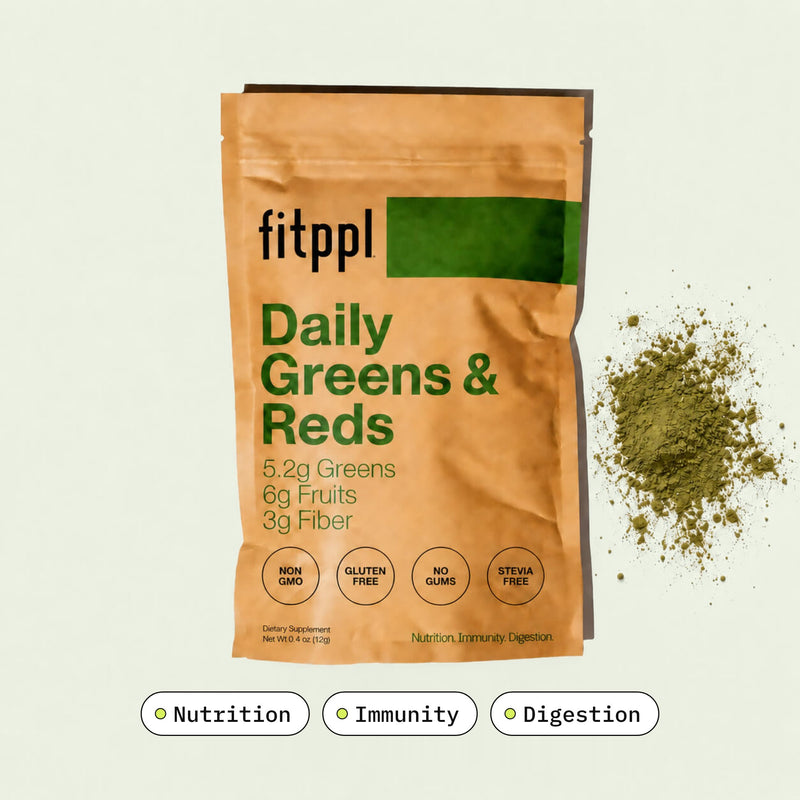
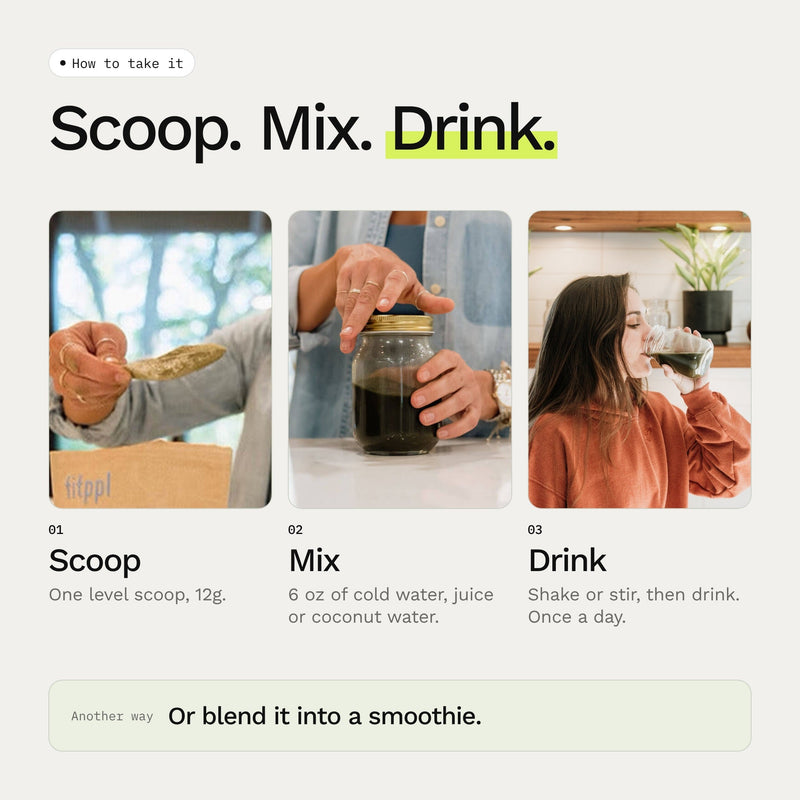
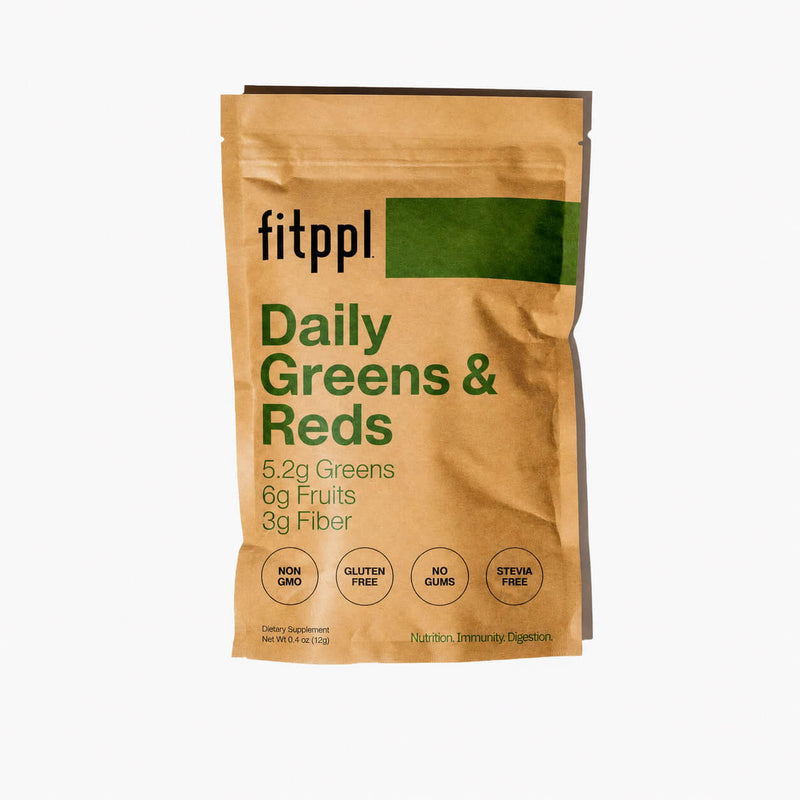
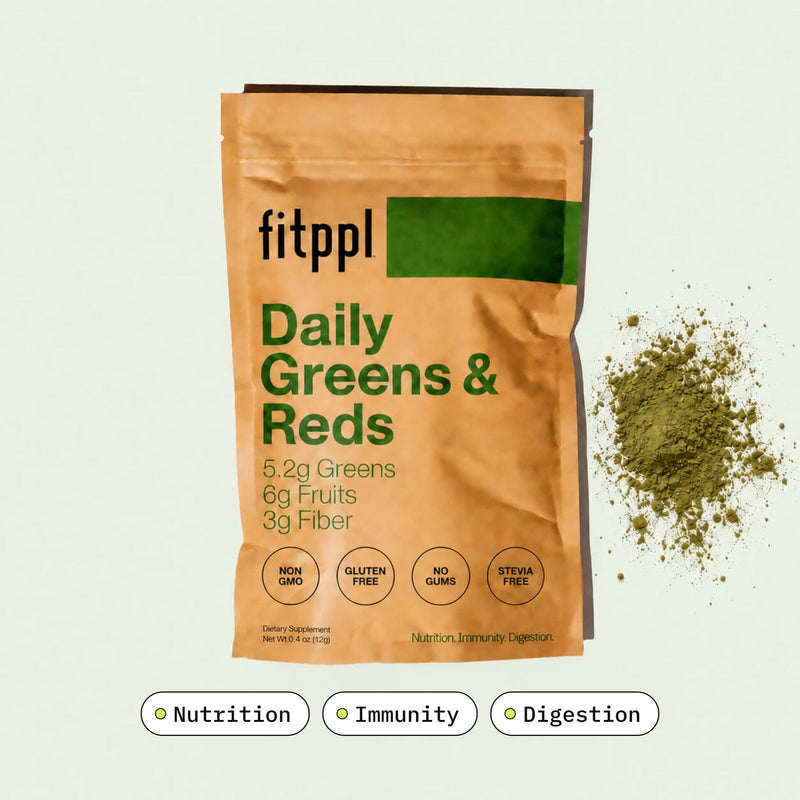
We built Daily Greens & Reds for the "worth it" column. Each 12g scoop has 5.2g of six organic greens, 6g of six organic fruits and 3g of fiber. It's sweetened only with monk fruit, with no stevia, gums or natural flavors, and its heavy metal results from Light Labs, an independent lab, are on the product page.9 It's still a backup for busy days, not a replacement for vegetables.
Comparing brands? See best greens powder, is AG1 worth it? and our Bloom Greens review.
The bottom line
A greens powder is a waste of money if you buy it as a shortcut around eating vegetables or for a promise it can't keep. It can be worth it if you fall short on produce, you'll take it every day, and you pick one with real amounts on the label, some fiber and published test results.
Sources 11
Numbers in the article link to these sources.
- Esfahani A, Wong JM, Truan J, et al. Health effects of mixed fruit and vegetable concentrates: a systematic review of the clinical interventions. Journal of the American College of Nutrition, 2011.
- Zhang J, Oxinos G, Maher JH. The effect of fruit and vegetable powder mix on hypertensive subjects: a pilot study. Journal of Chiropractic Medicine, 2009.
- Lee SH, et al. Adults meeting fruit and vegetable intake recommendations, United States, 2019. MMWR, Centers for Disease Control and Prevention, 2022.
- U.S. Department of Agriculture and U.S. Department of Health and Human Services. Dietary Guidelines for Americans, 2020-2025.
- NIH Office of Dietary Supplements. Dietary Supplements: What You Need to Know.
- U.S. Food and Drug Administration. FDA 101: Dietary Supplements.
- National Institute of Diabetes and Digestive and Kidney Diseases. LiverTox: Spirulina.
- Cedars-Sinai. For warfarin: eating a consistent vitamin K diet.
- fitppl. Daily Greens & Reds Supplement Facts, ingredient list and prices.
- AG1. AG1 Next Gen product page: prices and Supplement Facts. Accessed November 25, 2026.
- Target. Bloom Nutrition Original Greens and Superfoods Powder, 30 servings: price and Supplement Facts. Accessed November 25, 2026.