Best Diet Additions: The Benefits of Greens in Every Meal
Eat your greens! You've probably heard this a thousand times. It likely started with your parents, then a health teacher, and more recently the media and your friends. There's a reason you...

Eat your greens!
You've probably heard this a thousand times. It likely started with your parents, then a health teacher, and more recently the media and your friends. There's a reason you keep hearing it: it's good advice. Yet only about 1 in 10 US adults eats enough vegetables.1
Leafy greens, especially dark ones, are some of the healthiest foods you can eat. Cruciferous vegetables like broccoli, Brussels sprouts, bok choy and arugula bring big benefits too.
Not everyone loves them, though. Some people find them bland, others don't like all the chewing, and they can seem pricey or tricky to cook. If you're hesitant to eat your greens, even though you know you should, read on for the benefits and some tricks to make it easier.
The benefits of greens
People have been eating green plants for hundreds of thousands of years. Today there are more varieties, and more ways to prepare them, than ever. Here's what they do for you:
- Heart health: eating more leafy greens and cruciferous vegetables is linked with better heart health.2
- Brain health: in a study of older adults, those who ate about one serving of leafy greens a day had slower cognitive decline. Nutrients like vitamin K, lutein, folate and nitrate may be why.3
- Bone health: greens bring vitamin K, calcium and magnesium.
- Antioxidants: they're rich in carotenoids, polyphenols and vitamin C.
- Fullness: they're high in fiber and water and low in calories.
- A natural glow: in one study, eating more fruits and vegetables gave people a visibly healthier, warmer skin tone within six weeks, thanks to carotenoids.5
The healthiest greens
Greens may look alike, but they have a wide range of flavors, so there's something for everyone.
Kale is a standout. It's rich in vitamins A, C and K, calcium, folate, potassium and fiber, and it's worth eating a few times a week. Collard greens are almost as impressive.
There are plenty of other options too. Green leaf, red leaf and romaine lettuce are great for salads. Swiss chard, spinach and turnip greens make wonderful sides. Cabbage is easy to add to all kinds of recipes, and herbs like cilantro, parsley, mint and thyme make a fantastic finishing touch.
The ways to use greens are endless. Looking for ideas? Check out our recipes.
Common obstacles
Not everyone knows how to cook or enjoys it. Some people don't like the taste no matter how greens are prepared. Others find some greens make them gassy, or that fresh produce strains their food budget. (Tip: frozen spinach and kale are affordable and just as nutritious.)
Consider a greens and reds powder
A supplement should never replace whole foods, but it can help support your overall diet. A greens and reds powder is a quick, easy way to get more plants in on busy days. Mix it into water, smoothies or juice.
Research on these powders is still early, but promising. In a small pilot study, people with high blood pressure who took a fruit and vegetable powder drink for 90 days saw their blood pressure drop.4 Still, a scoop doesn't have the fiber or volume of a plate of vegetables, so keep eating plenty of whole fruits and vegetables too.
One caution: leafy greens are high in vitamin K. If you take the blood thinner warfarin, keep your vitamin K intake consistent and check with your doctor before adding a greens powder.6
Greens are good for you
As you can see, greens are great for your health. Whether you eat plenty in their natural form, add a greens and reds powder, or both, you'll be doing your body a favor.
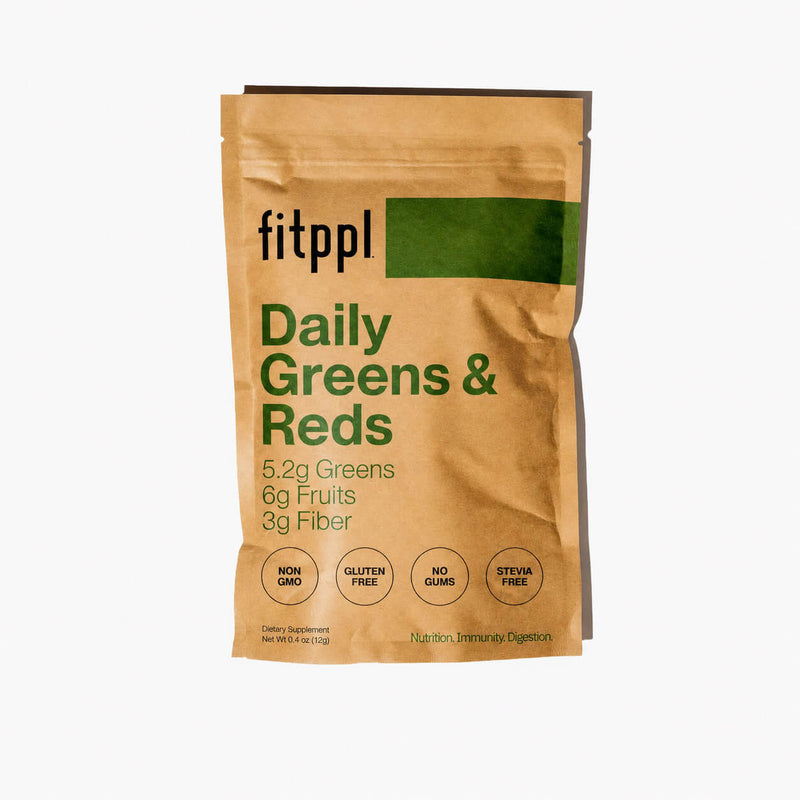
Now, go eat your greens! And if you're looking for an easy daily boost, try our Daily Greens & Reds Superfood.
Sources 6
Numbers in the article link to these sources.
- Lee SH, Moore LV, Park S, Harris DM, Blanck HM. Adults meeting fruit and vegetable intake recommendations, United States, 2019. MMWR, 2022.
- Blekkenhorst LC, et al. Cardiovascular health benefits of specific vegetable types: a narrative review. Nutrients, 2018.
- Morris MC, et al. Nutrients and bioactives in green leafy vegetables and cognitive decline: prospective study. Neurology, 2018.
- Zhang J, Oxinos G, Maher JH. The effect of fruit and vegetable powder mix on hypertensive subjects: a pilot study. Journal of Chiropractic Medicine, 2009.
- Whitehead RD, et al. You are what you eat: within-subject increases in fruit and vegetable consumption confer beneficial skin-color changes. PLoS One, 2012.
- Cedars-Sinai. For warfarin: eating a consistent vitamin K diet.