Erythritol-Free Protein Powder: What to Look For
Looking for a protein powder without erythritol? The ingredient label is the first place to look. Erythritol is a sugar alcohol used to add sweetness without adding much sugar. Some people are...

Looking for a protein powder without erythritol? The ingredient label is the first place to look.
Erythritol is a sugar alcohol used to add sweetness without adding much sugar. Some people are comfortable with it, while others prefer to avoid sugar alcohols because of taste, digestive tolerance, ingredient preferences, or questions raised by newer research.
Choosing an erythritol-free protein powder doesn't have to be complicated. Here's what to look for and what the current evidence can and can't tell us.
How to Find a Protein Powder Without Erythritol
Start with the full ingredient list rather than the claims on the front of the package. Look for:
- erythritol
- sugar alcohols or polyols
- sweetener blends
- other sweeteners you prefer to avoid
It also helps to know the difference between a few common terms:
- Erythritol-free means the product doesn't contain erythritol specifically.
- Sugar-alcohol-free is broader and means the product contains no erythritol or other sugar alcohols.
- Unsweetened usually means no sweetener has been added. That's different from erythritol-free: a protein powder can be free of erythritol and still be sweetened with something else, like monk fruit.
What Is Erythritol and Why Is It Used in Protein Powder?
Erythritol is a sugar alcohol used as a sweetener in many low-sugar and reduced-calorie foods.
Protein powder brands may use it to add sweetness while keeping sugar low, often combined with other sweeteners.
That isn't automatically good or bad. Erythritol is simply one part of a formula that may or may not fit your preferences, much like choosing a protein powder without stevia.
Why Do Some People Choose Erythritol-Free Protein Powder?
Digestive tolerance
Sugar alcohols can cause digestive discomfort for some people, especially in larger amounts. Tolerance varies, so one person may notice nothing while another prefers to avoid sugar alcohols altogether.
Taste preference
Erythritol has a distinct sweetness and can create a cooling sensation. If you don't enjoy that, an erythritol-free protein powder may simply taste better to you.
Ingredient preferences
Some people prefer shorter, simpler ingredient lists. Others look for protein powders without sugar alcohols, artificial sweeteners, stevia, gums, or other ingredients they don't want in their routine. That's a personal preference rather than proof that one formula is healthier than another.
Questions about newer research
Recent research has raised questions about erythritol and heart health. A 2023 study found that people with higher blood levels of erythritol had a higher risk of heart attack, stroke or death,1 and a small 2024 trial found that a 30g dose made platelets more reactive in healthy volunteers.2
These findings are worth studying further, but they don't prove that normal amounts of erythritol in food cause heart attacks or strokes.
What Does the Research Say About Erythritol?
The evidence is more nuanced than calling erythritol simply safe or dangerous.
Digestive tolerance
Like other sugar alcohols, erythritol can cause digestive symptoms in large amounts. It's gentler than many, though. In one study, healthy adults tolerated 20 to 35g in a drink without symptoms, and 50g caused only some nausea and stomach rumbling. Xylitol caused more problems at the same doses.4
The amount in a specific protein powder matters too, which is another reason to look at the full product.
Heart health research
Studies have linked higher blood erythritol levels to heart attack and stroke, and lab and short-term studies have found effects on platelet activity.12
Other researchers urge caution in interpreting this. The body makes some erythritol itself, high levels may be a marker of blood sugar problems rather than a cause, and most long-term animal studies don't show the same clotting effects. They conclude that long-term clinical trials are needed before saying dietary erythritol causes harm.3
Is Erythritol-Free Protein Powder Better?
Not necessarily. "Erythritol-free" tells you only one thing: the product doesn't contain erythritol. It doesn't automatically mean better ingredients, more protein, fewer additives, better taste or better nutrition.
When comparing protein powders' ingredient and quality standards, read the whole formula:
- protein amount and source
- full ingredient list
- type of sweetener
- added sugar
- allergens
- additives or gums
- dietary certifications
- how well it fits your preferences
Erythritol may be one factor in your decision, but it shouldn't be the only one.
Does fitppl Optimal Plant Protein Contain Erythritol?
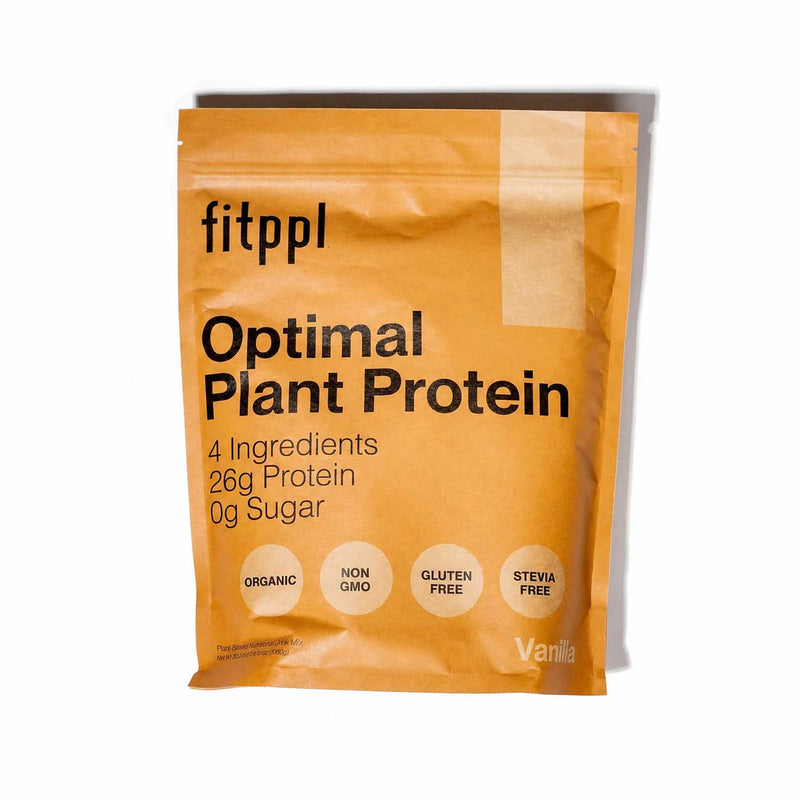
No. fitppl Optimal Plant Protein doesn't contain erythritol. The vanilla formula uses four ingredients:
- organic brown rice protein
- organic pea protein
- organic vanilla
- organic monk fruit
Each serving provides 26g of organic plant protein, with monk fruit used for sweetness instead of erythritol.
The Bottom Line
Choosing an erythritol-free protein powder comes down to your ingredient preferences, digestive tolerance, taste, and what you want from the overall formula.
Rather than judging a protein powder by one ingredient, read the full label and consider the protein source, sweeteners, additives, allergens and overall nutrition.
If you're looking for a plant-based protein powder without erythritol, fitppl Optimal Plant Protein provides 26g of organic plant protein and uses monk fruit for sweetness.
Sources 4
Numbers in the article link to these sources.
- Witkowski M, Nemet I, et al. The artificial sweetener erythritol and cardiovascular event risk. Nature Medicine, 2023.
- Witkowski M, Wilcox J, et al. Ingestion of the non-nutritive sweetener erythritol, but not glucose, enhances platelet reactivity and thrombosis potential in healthy volunteers. Arteriosclerosis, Thrombosis, and Vascular Biology, 2024.
- Mazi TA, Stanhope KL. Elevated erythritol: a marker of metabolic dysregulation or contributor to the pathogenesis of cardiometabolic disease? Nutrients, 2023.
- Storey D, Lee A, Bornet F, Brouns F. Gastrointestinal tolerance of erythritol and xylitol ingested in a liquid. European Journal of Clinical Nutrition, 2007.