Protein Powder for Weight Loss: What the Research Says and How to Use It
How protein helps with fullness and muscle while you lose weight, how much you need, what to check on the label, and why calories still matter.

Protein powder shows up in almost every weight loss plan, and for good reason: protein helps you feel full and helps you hold on to muscle while you eat less. But a scoop of powder doesn't burn fat, and a big smoothie can quietly add more calories than it saves.
Here's what the research actually says, how much protein to aim for, what to check on the label and how to use a shake without working against yourself. We make two plant protein powders, Optimal and Foundational, so keep that in mind as you read. Every number below comes from a study or a label, with sources at the end.
The short answer
- Protein helps you feel full. Higher-protein diets lead to modestly greater fullness.1
- It helps protect muscle while you lose weight. In trials with the same calories, higher-protein diets led to slightly more fat loss and less muscle loss.3
- Calories still decide the outcome. To lose weight, you need to use more calories than you take in.7 Protein powder makes that easier. It doesn't replace it.
- Look for the most protein per calorie. A good powder gets most of its calories from protein, with little or no added sugar.
- Swap, don't add. Use a shake in place of a snack or part of a meal, not on top of everything else.
How protein helps with weight loss
It keeps you full
Protein tends to be more filling than carbohydrates or fat. A review in the American Journal of Clinical Nutrition found that higher-protein diets, with about 1.2 to 1.6g of protein per kilogram of body weight a day, led to greater feelings of fullness, along with more weight loss, more fat loss and better preservation of lean mass during calorie restriction.1 Feeling full makes it easier to eat a little less without fighting hunger all day.
Plant protein works too. In one small study, a 20g pea protein drink taken 30 minutes before a meal reduced how much people ate at that meal, similar to casein and more than whey. The effect disappeared when the drink was taken as the meal started.6 It's one short-term study, so treat it as a hint, not a rule.
It helps you keep muscle
When you lose weight, some of it is usually muscle. More protein helps protect it. A review of 24 trials found that higher-protein, calorie-restricted diets led to slightly more weight and fat loss, less loss of lean mass and a smaller drop in resting metabolism than standard-protein diets with the same calories.3
Pair protein with strength training and the effect is stronger. In a four-week study, young men on a large calorie deficit who trained hard and ate 2.4g of protein per kilogram a day gained lean mass and lost more fat than those eating 1.2g per kilogram.4
It takes more energy to digest
Your body uses more energy to digest protein than carbohydrates or fat.2 The difference is modest, so think of it as a small bonus rather than the main reason to eat more protein.
Calories still matter
None of the benefits above override calories. Weight loss comes from using more energy than you take in, and the CDC notes that people who lose weight gradually, about 1 to 2 pounds a week, are more likely to keep it off.7
That's where protein shakes can backfire. A scoop of powder is usually 100 to 150 calories. Blend it with a banana, two tablespoons of nut butter and a cup of oat milk, and it can easily pass 500. That can be a perfectly good meal, but it's not a light snack. If you're adding shakes on top of what you already eat, you're adding calories.
How much protein do you need to lose weight?
The baseline recommendation for adults is 0.8g of protein per kilogram of body weight a day.10 That's the minimum to avoid deficiency, not the amount studied for weight loss. Weight loss trials showing benefits used about 1.2 to 1.6g per kilogram,1 and for active people the International Society of Sports Nutrition suggests 1.4 to 2.0g per kilogram.5
| Body weight | Baseline (0.8g/kg) | Weight loss range (1.2 to 1.6g/kg) |
|---|---|---|
| 130 lb (59kg) | 47g | 71 to 94g |
| 150 lb (68kg) | 54g | 82 to 109g |
| 180 lb (82kg) | 65g | 98 to 131g |
| 200 lb (91kg) | 73g | 109 to 145g |
Spread that across your meals and most people still get the bulk from food. One shake adds roughly 18 to 26g. If you have kidney disease or another condition that affects protein needs, talk to your doctor before eating more protein.
What to check on the label
| What to check | Why it matters for weight loss |
|---|---|
| Protein per calorie | Divide grams of protein by calories. Around 15 to 20g of protein per 100 calories means most of the calories come from protein. |
| Serving size | Some powders list one scoop, others two. Compare per serving, and check the grams. |
| Sugar | Look for 0 to 2g of added sugar. Sugar adds calories without adding fullness. |
| Sweetener | Most use stevia, sugar alcohols like erythritol, sucralose or monk fruit. Pick one you'll actually enjoy drinking. |
| "Weight loss" or "fat burner" claims | Added stimulants or "metabolism" blends aren't needed. The protein is what does the work. |
| Heavy metal testing | Plant proteins tend to carry more lead than dairy.11 Choose a brand that publishes results. More in our guide to lead in protein powder. |
How to use protein powder for weight loss
- Replace, don't add. Swap a shake in for an afternoon snack or a rushed breakfast.
- Make it a meal on purpose. If a shake is replacing a meal, add fiber and nutrients with fruit, oats, greens or chia, and count the calories.
- Keep it light as a snack. Powder with water or unsweetened plant milk stays around 100 to 200 calories.
- Don't stress about timing. Total protein across the day matters more than when you drink it. More on timing in when to take protein powder.
- Keep strength training. Protein plus resistance training is the best way to keep muscle while you lose fat.4
Need ideas? Our protein shake recipes include lighter options.
Our proteins, by the numbers
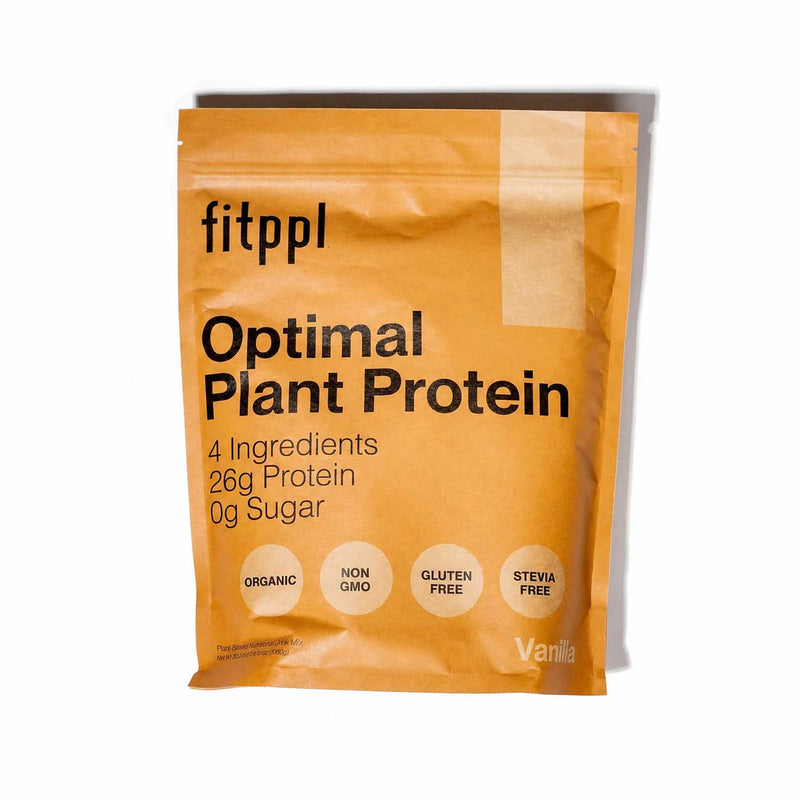
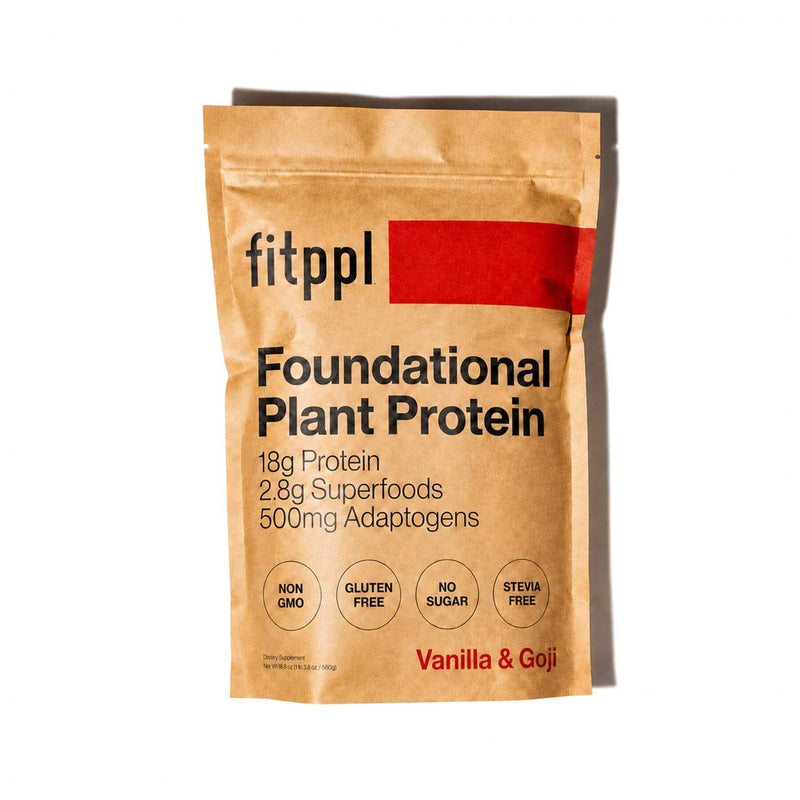
| Optimal Plant Protein | Foundational Plant Protein | |
|---|---|---|
| Protein | 26g per 36g serving | 18g per 28g serving |
| Calories | 150 | 100 |
| Protein per 100 calories | 17g | 18g |
| Sugar | 0g | Less than 1g, 0g added |
| Sweetened with | Organic monk fruit | Monk fruit |
| Ingredients | Organic pea protein, organic brown rice protein, organic vanilla, organic monk fruit | Organic brown rice, pea and hemp protein, plus organic greens, fruit and adaptogens |
Figures are from each product's label.89 Optimal gives you more protein per scoop. Foundational is lighter, at 100 calories, if you're keeping a snack small.
Here's what two verified buyers wrote, word for word:
"I mix this with the Superfood + Adaptogens, blueberries, & unsweetened vanilla almond milk each morning after my workout. It is the perfect post workout drink that keeps me full and energized until lunch. What a wonderful clean product with excellent customer service!!"
Angela P., verified buyer, Optimal Plant Protein
"This is the best protein powder I have every used. Mixes easily with my oatmeal every morning and is quite filling. I like that it has no sugar and has natural ingredients."
Jeffrey R., verified buyer, Foundational Plant Protein
Everyone's results are different, and no protein powder causes weight loss by itself.
If you're taking a GLP-1 medication
Medications like semaglutide reduce appetite, which can make it harder to eat enough protein. We cover what to look for in our guide to protein powder on GLP-1 medications. Follow your prescriber's advice on diet.
The bottom line
Protein powder can make weight loss easier. Protein keeps you full and helps you hold on to muscle while you eat less, and a powder is a simple way to get more of it. But it works through calories, not around them. Choose a powder with plenty of protein per calorie and little sugar, use it in place of something rather than in addition, and keep lifting. If you're plant-based, we also answer whether vegan protein powder is good for weight loss.
Sources 11
Numbers in the article link to these sources.
- Leidy HJ, Clifton PM, et al. The role of protein in weight loss and maintenance. American Journal of Clinical Nutrition, 2015.
- Westerterp KR. Diet induced thermogenesis. Nutrition & Metabolism, 2004.
- Wycherley TP, et al. Effects of energy-restricted high-protein, low-fat compared with standard-protein, low-fat diets: a meta-analysis. American Journal of Clinical Nutrition, 2012.
- Longland TM, et al. Higher compared with lower dietary protein during an energy deficit combined with intense exercise promotes greater lean mass gain and fat mass loss. American Journal of Clinical Nutrition, 2016.
- Jäger R, et al. International Society of Sports Nutrition Position Stand: protein and exercise. Journal of the International Society of Sports Nutrition, 2017.
- Abou-Samra R, et al. Effect of different protein sources on satiation and short-term satiety when consumed as a starter. Nutrition Journal, 2011.
- Centers for Disease Control and Prevention. Losing weight.
- fitppl. Optimal Plant Protein Nutrition Facts.
- fitppl. Foundational Plant Protein Nutrition Facts.
- Institute of Medicine. Dietary Reference Intakes for Energy, Carbohydrate, Fiber, Fat, Fatty Acids, Cholesterol, Protein, and Amino Acids. National Academies Press, 2005.
- Consumer Reports. Protein powders and shakes contain high levels of lead. October 2025, updated January 2026.