Lead in Protein Powder: What Testing Found and How to Choose
What independent testing found about lead and other heavy metals in protein powder, what the limits mean, and how to read a test report.

In October 2025, Consumer Reports tested 23 protein powders and shakes for lead and other heavy metals. Plant-based products had the most lead, on average about nine times as much as dairy-based ones.1 There are no federal limits on heavy metals in protein powder,1 so it's mostly up to you to know what to look for.
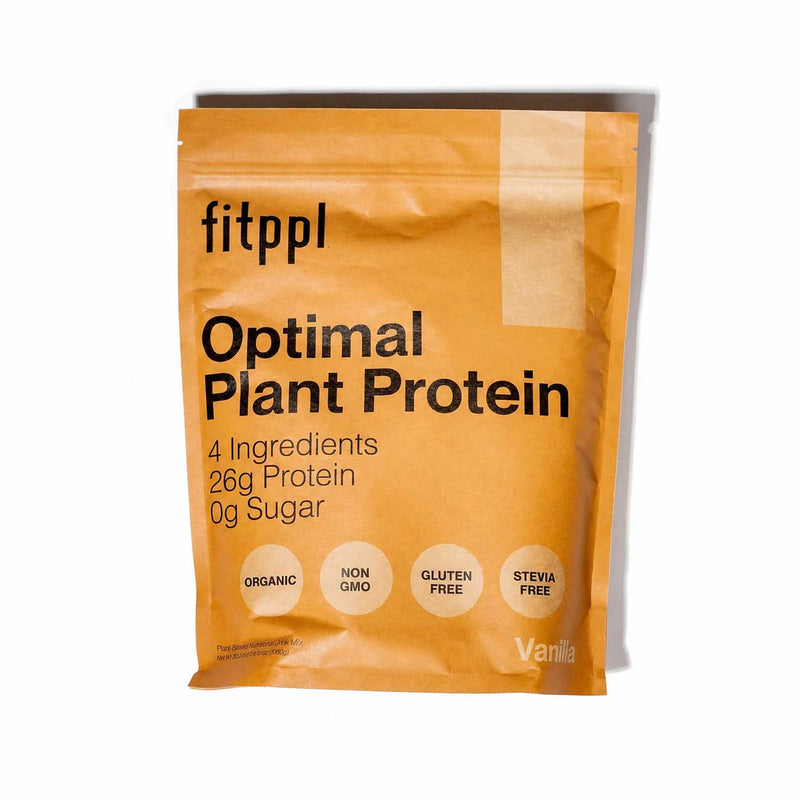
We make a plant protein, fitppl Optimal Plant Protein, so this topic matters to us directly. We publish our own test results, and we've put them below next to everyone else's, including where ours are higher.
The short answer
- Most protein powders contain some lead. Consumer Reports detected lead in 22 of the 23 products it tested in 2025.2
- Plant-based powders tend to have more, because plants take up lead from the soil, water and air they grow in.3
- Serving size matters. The two highest lead results came from large servings of 315g and 90g.2
- Look for published test results that list lead, cadmium, arsenic and mercury per serving, with a test date. Consumer Reports recommends checking for them before you buy.3
Why is there lead in protein powder?
Lead is in soil, water and air, and plants absorb it as they grow.3 Protein powder concentrates the protein from plants like peas and rice. Consumer Reports notes that processing may also add some lead, though it didn't determine how much.3
That's why plant-based powders tend to test higher. In Consumer Reports' testing, plant-based products averaged about nine times the lead of dairy-based ones and about twice that of beef-based ones.3 Dairy powders aren't free of lead, though. Half of the dairy-based products still had enough that Consumer Reports advised against using them every day.1
How much lead is too much?
There's no federal limit for heavy metals in protein powder, and the FDA doesn't review or test supplements before they're sold.1 Consumer Reports' position is that no amount of lead is completely safe, and that the biggest concern is repeated exposure, because lead builds up in the body over time.3 Two benchmarks help put a number in context:
| Benchmark | What it covers | Lead |
|---|---|---|
| USP <2232> | Heavy metals in dietary supplements. Following it is voluntary. | 5 mcg a day |
| FDA interim reference levels | Lead from all the food you eat in a day | 2.2 mcg a day for children; 8.8 mcg a day for women of childbearing age |
USP <2232> is the U.S. Pharmacopeia's standard for heavy metals in dietary supplements. It sets daily limits of 5 mcg of lead, 5 mcg of cadmium, 15 mcg of inorganic arsenic and 15 mcg of mercury. Following it is voluntary, but it's a common benchmark for testing supplements.4 The FDA's reference levels apply to your whole diet, not to one product, so a protein shake counts toward that daily total.5
What independent testing found
Here are the plant-based powders from Consumer Reports' 2025 and 2026 testing, one popular whey powder for comparison, and our own latest result. Amounts are per serving, as each brand defines a serving.
| Protein powder (serving) | Lead | Cadmium | Arsenic | Mercury | Tested by |
|---|---|---|---|---|---|
| Naked Nutrition Vegan Mass Gainer, vanilla (315g) | 7.70 mcg | 3.45 mcg | 2.41 mcg | Not detected | Consumer Reports, 20252 |
| Huel Black Edition, chocolate (90g) | 6.31 mcg | 9.21 mcg | 1.42 mcg | 0.08 mcg | Consumer Reports, 20252 |
| Garden of Life Sport Organic Plant-Based, vanilla (45g) | 2.76 mcg | 1.93 mcg | 1.33 mcg | 0.01 mcg | Consumer Reports, 20252 |
| Momentous 100% Plant Protein, chocolate (37.7g) | 2.33 mcg | 1.95 mcg | 1.61 mcg | Not detected | Consumer Reports, 20252 |
| fitppl Optimal Plant Protein, vanilla (36g) | 1.01 mcg | 3.35 mcg | Not detected | 0.25 mcg | Light Labs, Sept 20266 |
| Vega Premium Sport Protein, chocolate (44g) | 0.91 mcg | 4.36 mcg | 0.59 mcg | Not detected | Consumer Reports, 20252 |
| Orgain Organic Protein, vanilla bean (46g) | 0.70 mcg | 1.03 mcg | 0.80 mcg | Not detected | Consumer Reports, 20252 |
| PlantFusion Complete Protein, vanilla bean (30g) | 0.69 mcg | 1.28 mcg | 0.56 mcg | 0.01 mcg | Consumer Reports, 20252 |
| KOS Organic Superfood Plant Protein, vanilla (37g) | 0.55 mcg | 1.26 mcg | 0.51 mcg | 0.01 mcg | Consumer Reports, 20252 |
| Ritual Essential Protein Daily Shake, chocolate (33g) | 0.53 mcg | 1.94 mcg | 0.37 mcg | 0.01 mcg | Consumer Reports, 20267 |
| Truvani Plant-Based Protein, chocolate (33g) | 0.46 mcg | 3.27 mcg | 0.48 mcg | 0.03 mcg | Consumer Reports, 20267 |
| Optimum Nutrition Gold Standard 100% Whey, chocolate (30.5g) | 0.27 mcg | 0.24 mcg | 0.16 mcg | Not detected | Consumer Reports, 20252 |
| USP <2232> daily limit | 5 mcg | 5 mcg | 15 mcg (inorganic) | 15 mcg | U.S. Pharmacopeia4 |
Consumer Reports' arsenic figures are total arsenic, which includes forms that USP <2232> doesn't limit.2 A few things stand out:
- Three results were over a USP <2232> daily limit: lead in Naked Nutrition and Huel, and cadmium in Huel.
- Ours isn't the lowest. Optimal's lead was in the middle of this group, and its cadmium was higher than most. Its mercury, 0.25 mcg, was the highest here, though it's under 2% of the USP limit.
- The lowest-lead plant powders in these tests were Truvani and Ritual, both just over half a microgram per serving.7
- Some products have changed. Vega told Consumer Reports it renamed this protein and moved its pea sourcing from China to North America, and Momentous said its tested products were discontinued.3
- Treat this as a snapshot. Consumer Reports averaged two or three lots of each product.2 Our result is from our most recent test, in September 2026. Metals vary from batch to batch, and these results come from different labs and years.
Don't overlook cadmium
Lead gets the headlines, but cadmium is often the bigger number in plant protein. Cadmium is common in plant foods like leafy greens, potatoes and grains, and with repeated exposure it builds up in the kidneys.8 In the table above, most of the plant powders had more cadmium than lead, and ours did too. Optimal's 3.35 mcg is about two-thirds of the USP <2232> daily limit of 5 mcg.46
How to read a heavy metal test report
- Look for all four metals. Lead, cadmium, arsenic and mercury are the four that USP <2232> covers.4 A report that shows only lead leaves out part of the picture.
- Check the units. Results per serving, in micrograms (mcg), are the easiest to compare with daily limits. Labs often report parts per billion (ppb) instead, which means micrograms per kilogram of powder. To convert, multiply the ppb by the serving size in grams and divide by 1,000. For example, 28 ppb in a 36g serving is about 1 mcg.
- Compare serving sizes. A 315g mass gainer serving and a 30g scoop are very different amounts of powder, so a per-serving result reflects both the powder and how much of it you use.2
- Know what "not detected" means. It means the amount was below what the lab could measure, not necessarily zero.
- Check the date and who did the testing. Metals vary from batch to batch, so a recent result from an independent lab tells you more than an old one or a general claim that a product is "tested."
How to lower your exposure
- Choose brands that publish results. When Consumer Reports did its testing, only a few of the brands it tested published their heavy metal results.3
- Watch how many servings you have. If you have more than one scoop a day, the amounts add up. Consumer Reports suggests regular users consider cutting back.1
- Get protein from food, too. Beans, eggs, dairy, fish and poultry all count.3
- Take extra care with kids and pregnancy. Consumer Reports says children and pregnant people are the most vulnerable to lead and should be especially cautious.3 If you're pregnant, ask your doctor before using any protein supplement.
Our results
We test Optimal Plant Protein with Light Labs, an independent lab, and publish the full report on the product page. The latest test, from September 2026, found per 36g serving:6
| Metal | Optimal Plant Protein | USP <2232> daily limit | Share of the limit |
|---|---|---|---|
| Lead | 1.01 mcg | 5 mcg | About 20% |
| Cadmium | 3.35 mcg | 5 mcg | About 67% |
| Arsenic | Not detected | 15 mcg (inorganic) | Not detected |
| Mercury | 0.25 mcg | 15 mcg | Under 2% |
We retest about every six months and post the newest results. We'd rather you see our numbers next to everyone else's than take our word for it.
For a side-by-side look at ingredients, sweeteners and price, see our guide to the best plant-based protein powders, or read what to look for in a clean protein powder.
Sources 8
Numbers in the article link to these sources.
- Consumer Reports. Investigation finds two-thirds of protein powders and shakes tested contained high levels of lead in a single serving. October 2025.
- Consumer Reports. Protein powders and shakes: methodology and test results. October 2025.
- Consumer Reports. Protein powders and shakes contain high levels of lead. October 2025, updated January 2026.
- USP General Chapter <2232> Elemental Contaminants in Dietary Supplements: daily limits for lead, cadmium, arsenic and mercury, as summarized by BSCG.
- Flannery BM, Middleton KB. Updated interim reference levels for dietary lead to support FDA's Closer to Zero action plan. Regulatory Toxicology and Pharmacology, 2022.
- fitppl. Optimal Plant Protein product page and Light Labs heavy metal report (tested September 7, 2026).
- Consumer Reports. Protein supplements: test methodology and test results. January 2026.
- Agency for Toxic Substances and Disease Registry. ToxFAQs: Cadmium.