


26g protein, 2.1g leucine
Best Protein Powder for Muscle Gain
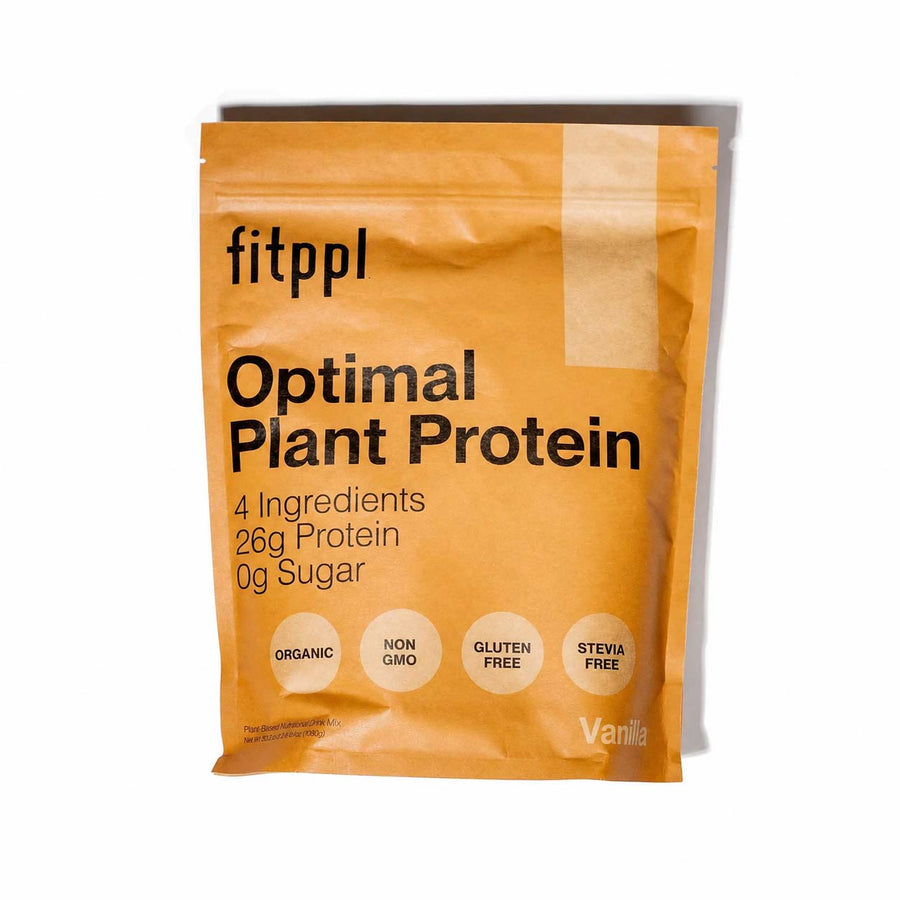
Organic pea and brown rice protein in one scoop. Each serving (36g) of Optimal has 26g of protein, 2.1g of leucine and 0g of sugar, from just four ingredients.
4.9 average from 95 reviews

Per serving (36g)
Optimal Plant Protein
From the label and amino acid profile.
Optimal Plant Protein
Organic pea and brown rice protein, vanilla and monk fruit. 26g of protein a scoop.
-
Optimal Plant Protein
Our simplest formula: organic pea and brown rice protein, vanilla and monk fruit.
- Protein
- 26g per serving
- Protein from
- Organic pea and brown rice
- Sweetened with
- Organic monk fruit
- Sugar
- 0g
- Certified
- Organic, Non-GMO, gluten-free
Best for: the most protein from the fewest ingredients.
$69.99$59.49 with subscribe & save
Shop now
From people who train with it
4.9 average from 95 reviews of Optimal Plant Protein. Quotes from verified buyers.
-
Fantastic protein option
“I've been using the Optimal Plant Protein for years now and have no complaints! It's delicious, especially when combined with fruit (bananas are my go-to) and I can see a difference in muscle retention/growth when used in conjunction with my workout routine. I also love how natural and chemical-free the ingredients are.”
Jon S.Verified buyer · Optimal Plant Protein -
The BEST protein powder
“Forget just vegan protein, I'd put this mix up against any quality isolate protein on taste AND results. It doesn't get any better than this!”
NickVerified buyer · Optimal Plant Protein -
Amazing, natural, one of a kind protein powder!
“I love this vanilla fitppl. Great for after a good morning lift to get my day rolling. Recommend to anyone looking to get/keep fit!”
John H.Verified buyer · Optimal Plant Protein
What is the best protein powder for muscle gain?
The best protein powder for muscle gain gives you enough high-quality protein in one serving to make a difference, fits your diet, and is something you'll actually take every day. Training is what builds muscle. Protein powder helps by making it easier to eat enough protein to support it.1
Here's what to look for on the label:
- 20g to 40g of protein per serving. That's the range the International Society of Sports Nutrition (ISSN) recommends per meal or shake for people who train.2
- Enough leucine. Leucine is the amino acid most closely tied to switching on muscle building. The ISSN suggests 700mg to 3,000mg per serving.2
- A complete amino acid profile. All nine essential amino acids. For plant protein, that usually means a blend, like pea with brown rice.7
- Little you don't need. Added sugar, fillers and long proprietary blends don't help you build muscle.
- Published testing. Plant proteins pick up metals from soil, so look for a brand that publishes heavy metal results.12
Here's how Optimal Plant Protein measures up, straight from the label:11
| Per serving (36g) | Optimal Plant Protein |
|---|---|
| Protein | 26g |
| Leucine | 2.1g |
| BCAAs (leucine, isoleucine, valine) | 4.7g |
| Calories | 140 |
| Sugar | 0g |
| Protein from | Organic pea and organic brown rice |
| Ingredients | 4: organic pea protein, organic brown rice protein, organic vanilla, organic monk fruit |
Does protein powder help build muscle?
Yes, modestly, when it's paired with strength training. The largest review on the question pooled 49 trials with 1,863 people. Adding protein to a resistance training program led to more gains in lean mass (about 0.3kg on average) and strength than training alone.1
That's a real effect, but a small one. The training is doing most of the work. Protein powder is a convenient way to hit your daily protein target, not a shortcut around lifting.
Do you need protein powder to build muscle?
No. What matters is your total protein for the day, and you can get there with food alone. Protein powder helps when your schedule, appetite or diet makes that hard, like after an early workout, on busy days, or if you eat mostly plants and want an easy 26g without much fat or many calories.
How much protein do you need to build muscle?
In the same review, gains in lean mass leveled off at about 1.6g of protein per kilogram of body weight a day. Eating more than that didn't add more muscle on average.1 The ISSN recommends 1.4g to 2.0g per kilogram a day for most people who train.2 For comparison, the minimum for adults who don't train is 0.8g per kilogram.10
| Body weight | About 1.6g per kg a day | Range (1.4g to 2.0g per kg) |
|---|---|---|
| 130 lb (59kg) | 94g | 83g to 118g |
| 150 lb (68kg) | 109g | 95g to 136g |
| 180 lb (82kg) | 131g | 115g to 164g |
| 210 lb (95kg) | 152g | 133g to 190g |
Spread it across the day. The ISSN suggests a serving of 20g to 40g every three to four hours.2 One scoop of Optimal covers one of those servings. For a full breakdown, see how much protein powder per day.
Does plant protein build muscle as well as whey?
When you get enough of it, the research says yes:
- Pea vs. whey. In a 12-week trial of 161 young men doing resistance training, 50g a day of pea protein led to gains in muscle thickness similar to the same amount of whey.3 The study was funded by a pea protein maker.
- Rice vs. whey. In an 8-week study of 24 trained adults, 48g of rice protein on training days led to similar changes in lean mass and strength as 48g of whey.4
- Vegan vs. omnivore diets. In a 12-week study, vegans and meat-eaters who ate the same amount of protein, 1.6g per kilogram a day, gained similar muscle and strength.5
There's one catch. Gram for gram, most plant proteins have a little less leucine and are digested a little less completely than whey, so they can be slightly less effective per scoop.6 The fix is simple: blend plant proteins and use a full serving. Optimal's 26g has 2.1g of leucine, inside the range the ISSN recommends.211 For more, read plant protein vs. whey.
What makes a plant protein complete?
A complete protein has all nine essential amino acids in useful amounts. Pea protein is rich in lysine but low in methionine. Brown rice protein is the opposite. Blending them covers each one's gap, which is why so many plant protein powders, Optimal included, use both.7
When should you take protein powder for muscle gain?
Whenever it's easiest to fit in. A review of protein timing studies found that total daily protein mattered more than taking it right before or after a workout.8 After training is a convenient time for a shake, but so is breakfast or an afternoon snack. Spreading protein across your meals matters more than the clock.2
How do you use protein powder for muscle gain?
- Shake it. One level scoop (36g) in water or milk, in a shaker bottle or blender.
- Add calories if you're trying to gain weight. Blend with milk or soy milk, a banana, oats and a spoonful of peanut butter. Optimal has 140 calories a scoop, so the extras are where the calories come from.
- Bake or stir it in. Mix it into oatmeal, yogurt or pancake batter for an easy protein boost.
For ideas, see our protein shake recipes.
How many scoops a day?
Most people need one or two at most. Use protein powder to fill the gap between what you eat and your daily target, not to replace meals. Each scoop also adds to your heavy metal intake, so if you have more than one a day, the amounts add up. Optimal's per-serving results are published on the product page.12
Is creatine or protein powder better for muscle growth?
They do different jobs. Protein supplies the building blocks for muscle. Creatine helps you do a little more work in short, hard efforts, and with training it's been shown to increase lean mass and strength.9 Many people use both. If you only pick one, getting enough protein comes first, since you need it either way.
Will protein powder make you gain fat?
Only if it pushes you over the calories you burn, like any food. One scoop of Optimal is 140 calories with 26g of protein, so most of its calories come from protein. If you're trying to gain muscle without much fat, a small calorie surplus and consistent training matter more than any single product.
Why we make Optimal this way
- 26g of complete plant protein. Organic pea and brown rice protein, with 2.1g of leucine and 4.7g of BCAAs per serving.11
- Four ingredients. Organic pea protein, organic brown rice protein, organic vanilla and organic monk fruit. No gums, fillers, dairy or soy.
- 0g of sugar. Sweetened only with organic monk fruit. No stevia, erythritol or sucralose.
- Tested. We publish our heavy metal results from Light Labs, an independent lab.
- Certified. USDA Organic, Non-GMO Project Verified and certified gluten-free.
Everyone's results are different, and no protein powder builds muscle without the training. Optimal makes the protein part easier.
Sources
- Morton RW, et al. A systematic review, meta-analysis and meta-regression of the effect of protein supplementation on resistance training-induced gains in muscle mass and strength in healthy adults. British Journal of Sports Medicine, 2018.
- Jäger R, et al. International Society of Sports Nutrition position stand: protein and exercise. Journal of the International Society of Sports Nutrition, 2017.
- Babault N, et al. Pea proteins oral supplementation promotes muscle thickness gains during resistance training: a double-blind, randomized, placebo-controlled clinical trial vs. whey protein. Journal of the International Society of Sports Nutrition, 2015.
- Joy JM, et al. The effects of 8 weeks of whey or rice protein supplementation on body composition and exercise performance. Nutrition Journal, 2013.
- Hevia-Larraín V, et al. High-protein plant-based diet versus a protein-matched omnivorous diet to support resistance training adaptations: a comparison between habitual vegans and omnivores. Sports Medicine, 2021.
- van Vliet S, Burd NA, van Loon LJC. The skeletal muscle anabolic response to plant- versus animal-based protein consumption. Journal of Nutrition, 2015.
- Gorissen SHM, et al. Protein content and amino acid composition of commercially available plant-based protein isolates. Amino Acids, 2018.
- Schoenfeld BJ, Aragon AA, Krieger JW. The effect of protein timing on muscle strength and hypertrophy: a meta-analysis. Journal of the International Society of Sports Nutrition, 2013.
- Kreider RB, et al. International Society of Sports Nutrition position stand: safety and efficacy of creatine supplementation in exercise, sport, and medicine. Journal of the International Society of Sports Nutrition, 2017.
- Institute of Medicine. Dietary Reference Intakes for Energy, Carbohydrate, Fiber, Fat, Fatty Acids, Cholesterol, Protein, and Amino Acids. National Academies Press, 2005.
- fitppl. Optimal Plant Protein Nutrition Facts and amino acid profile.
- Consumer Reports. Protein powders and shakes contain high levels of lead. October 2025, updated January 2026.
Questions, answered
Quick answers about Optimal and training.
How much leucine is in Optimal?
Each 36g serving has 2.1g of leucine and 4.7g of branched-chain amino acids (leucine, isoleucine and valine), from organic pea and brown rice protein.
Is Optimal a complete protein?
Yes. Pea protein is rich in lysine and brown rice protein is rich in methionine, so the blend gives you all nine essential amino acids.
Can I have two scoops a day?
Yes. Two scoops give you 52g of protein. Just count them toward your daily protein, and keep in mind that heavy metal amounts are per serving, so two scoops means twice the amount.
Should I take Optimal before or after a workout?
Either works. Research suggests total daily protein matters more than timing, so take it whenever it fits your day. After training is a common, easy time.
Is Optimal a mass gainer?
No. It's 140 calories and 26g of protein a scoop. If you're trying to gain weight, blend it with milk, a banana, oats and peanut butter for more calories.
Does plant protein work as well as whey for building muscle?
In studies where people got enough protein, pea and rice protein led to muscle and strength gains similar to whey. Use a full serving of a blended plant protein like Optimal to get enough leucine.