

Organic pea protein, paired with rice
Pea Protein Powder
Both of our proteins are built on organic pea protein, blended with brown rice protein to round out the amino acids. Dairy-free, soy-free and certified gluten-free.
4.9 average from 553 reviews

Per serving
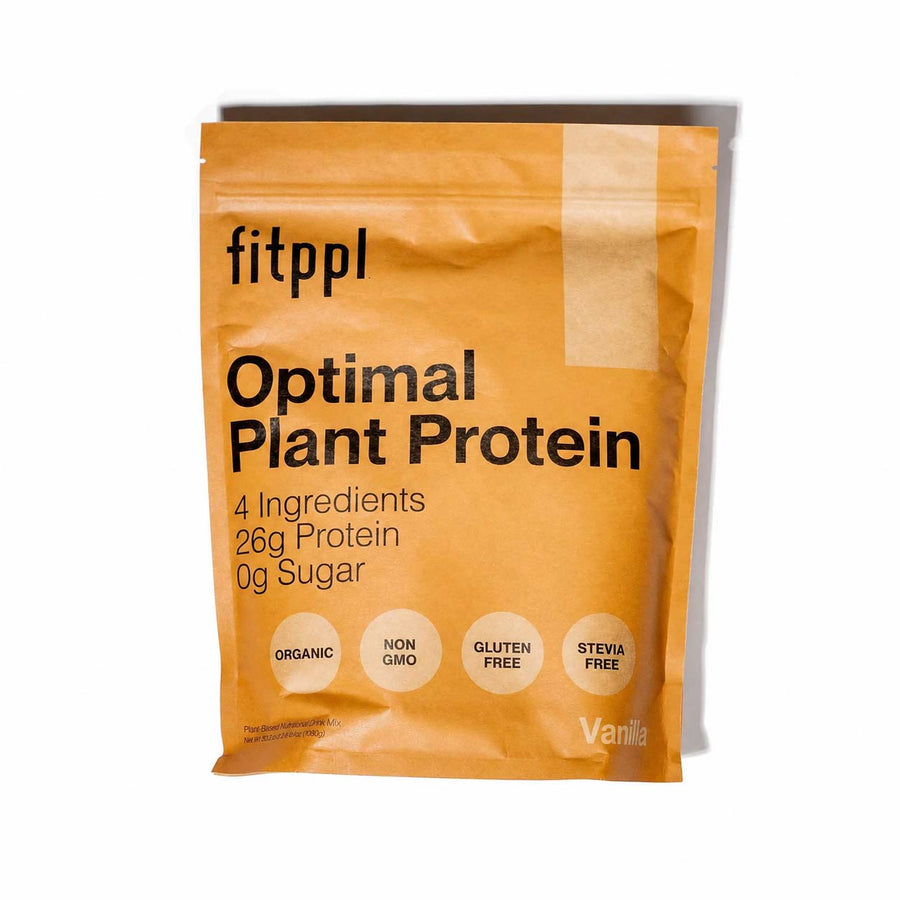
Optimal Plant Protein, vanilla
Four organic ingredients. Nutrition Facts on the product page.
Choose your protein
Optimal is organic pea and brown rice protein. Foundational is organic brown rice, pea and hemp, plus greens, fruits and adaptogens.
-
Optimal Plant Protein
Our simplest formula: organic pea and brown rice protein, vanilla and monk fruit.
- Protein
- 26g per serving
- Protein from
- Organic pea and brown rice
- Sweetened with
- Organic monk fruit
- Sugar
- 0g
- Certified
- Organic, Non-GMO, gluten-free
Best for: the most protein from the fewest ingredients.
$69.99$59.49 with subscribe & save
Shop now -
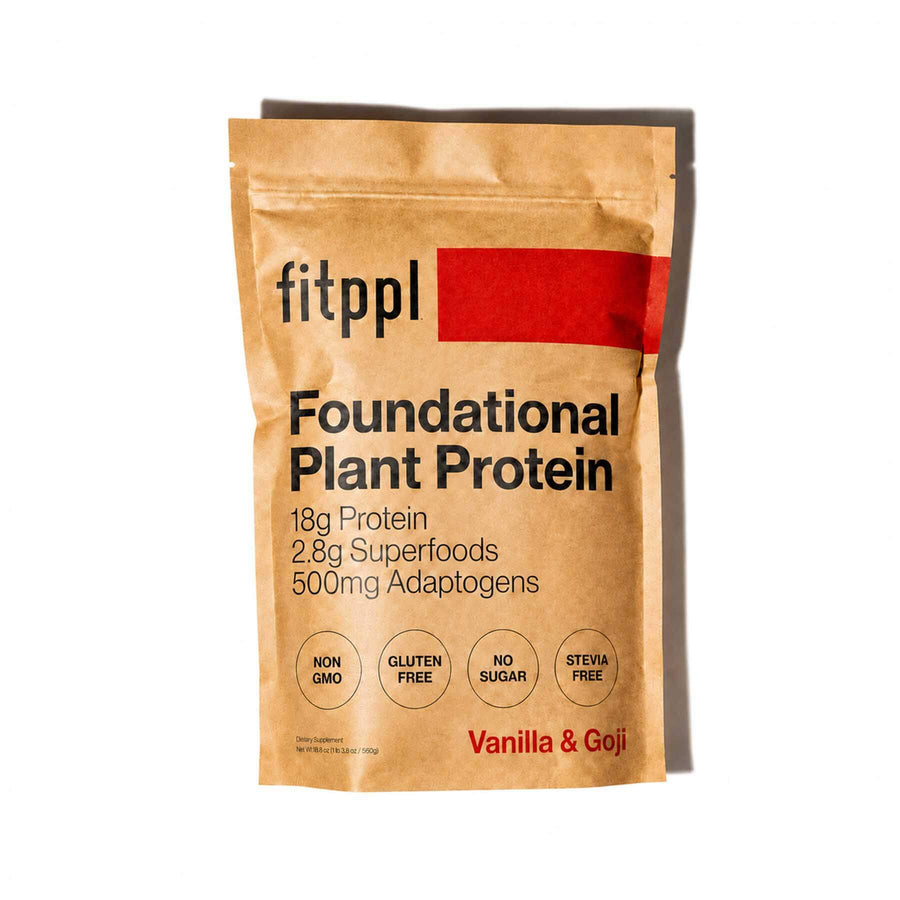
Foundational Plant Protein
Plant protein plus organic greens, fruits and adaptogens in one shake.
- Protein
- 18g per serving
- Protein from
- Organic brown rice, pea and hemp
- Sweetened with
- Monk fruit
- Sugar
- Less than 1g
- Certified
- Non-GMO, gluten-free
Best for: one daily shake that covers more than protein.
$54.99$46.74 with subscribe & save
Shop now
From people who made the switch
4.9 average from 553 reviews of our proteins. Quotes from verified buyers.
-
Impressed!
“First time buyer. As I lean increasingly plant-based, I was looking for a clean solution and an alternative to traditional whey. Thought the flavor was terrific, and it mixes exceptionally well in almond milk in a simple shaker. Added it to make a smoothie and it also was great. And, the mission is a fit for me, too. Will be buying again”
Cabot E.Verified buyer · Optimal Plant Protein -
“If you're anything like me, you might be hesitant about making the switch from whey to plant, but I have had a great experience with the protein I got from fitppl. Happy to support Eric and love the vanilla flavor!”
Matt F.Verified buyer · Optimal Plant Protein -
“Loved it, easy to blend in shaker cup and tastes WAY better than some other plant based organic protein powders. Recommended and looking forward to trying in some recipes”
Jason G.Verified buyer · Foundational Plant Protein
What is pea protein?
Pea protein is the protein separated from dried peas and made into a powder. Peas aren't one of the nine major food allergens in the U.S., a list that includes milk, soy and wheat,1 which is one reason pea protein shows up in so many dairy-free and allergy-friendly powders.
Both fitppl proteins use organic pea protein. Neither contains dairy or soy.
Is pea protein a complete protein?
Not quite on its own. An analysis of plant protein isolates found that pea protein is rich in lysine, at 5.9% of its protein, an essential amino acid many plant proteins are short on. But it's low in methionine, at 0.4%. Brown rice protein is the opposite: plenty of methionine (2.5%) but low in lysine (2.4%).2
The researchers suggest pairing the two at roughly half and half for a more complete amino acid profile.2 That's why neither of our proteins is pea alone. Both pair organic pea protein with organic brown rice protein, and Foundational adds hemp. Read more in our guide to brown rice protein powder.
Protein quality is often scored with PDCAAS, which looks at both a protein's essential amino acids and how well it's digested. Learn more in what is PDCAAS?
Pea protein vs. whey
In a 12-week study, 161 men aged 18 to 35 did resistance training and took 25g of pea protein, whey protein or a placebo twice a day. Muscle thickness went up in all three groups, with no significant overall difference between them. Among the men who started out weakest, the pea group gained more than the placebo group, and pea and whey weren't significantly different.3
The study only included men and was run with the company that made the pea protein, so treat it as early evidence. A separate 8-week study comparing rice protein with whey in 24 trained adults found similar gains in lean mass and strength with both.4
Heavy metals in pea protein
Plants take up lead and other metals from the soil, water and air they grow in, and Consumer Reports' testing found plant-based protein powders had more lead on average than dairy-based ones.5 Where the peas are grown can matter too. Vega told Consumer Reports it had moved its pea sourcing from China to North America.5
We test Optimal with Light Labs, an independent lab. Its latest test, in September 2026, found per 36g serving 1.01 mcg of lead, 3.35 mcg of cadmium, 0.25 mcg of mercury and no detectable arsenic.6 All were under USP <2232>. USP <2232> is the U.S. Pharmacopeia's standard for heavy metals in dietary supplements. It sets daily limits of 5 mcg of lead, 5 mcg of cadmium, 15 mcg of inorganic arsenic and 15 mcg of mercury. Following it is voluntary, but it's a common benchmark for testing supplements.7 For more, read our guide to lead in protein powder.
Our pea protein powders
| Optimal Plant Protein | Foundational Plant Protein | |
|---|---|---|
| Protein from | Organic pea and brown rice | Organic brown rice, pea and hemp |
| Protein per serving | 26g (36g serving) | 18g (28g serving) |
| Calories | 150 | 100 |
| Sugar | 0g | Less than 1g, 0g added |
| Sweetened with | Organic monk fruit | Monk fruit |
| Also in it | Organic vanilla. That's it. | Organic greens, fruits and adaptogens |
| Certified | USDA Organic, Non-GMO, gluten-free | Non-GMO, gluten-free |
Figures are from each product's label.68 Optimal also has 8.4mg of iron per serving.6 Both are dairy-free and soy-free.
How to use it
Shake it with water or plant milk, blend it into a smoothie, or stir it into oatmeal. Both also work in pancakes and baked goods. Find ideas in our recipes.
Questions, answered
Pea protein, amino acids and heavy metals, explained.
Is pea protein a complete protein?
Not quite on its own. Pea protein is rich in lysine but low in methionine. Pairing it with brown rice protein, which has the opposite profile, gives a more complete amino acid profile. Both of our proteins combine pea and brown rice.
Is pea protein as good as whey?
In a 12-week study of 161 men who did resistance training, gains in muscle thickness with pea protein weren't significantly different from whey. It's one study, and it only included men.
Is pea protein dairy-free and soy-free?
Yes. Pea protein comes from peas, so it has no dairy or soy. Both of our proteins are dairy-free, soy-free and certified gluten-free.
Does pea protein have heavy metals?
Like most plant proteins, it can contain small amounts, because plants take up metals from the soil. Optimal's latest test found 1.01 mcg of lead per 36g serving, under the USP <2232> daily limit of 5 mcg. We publish the full report on the product page.
Why do you blend pea protein with brown rice?
Each fills the other's gap. Pea protein is high in lysine and low in methionine, and brown rice protein is the reverse. Researchers suggest pairing them at roughly half and half.
Sources
- U.S. Food and Drug Administration. Food Allergies. Updated March 2026.
- Gorissen SHM, et al. Protein content and amino acid composition of commercially available plant-based protein isolates. Amino Acids, 2018.
- Babault N, et al. Pea proteins oral supplementation promotes muscle thickness gains during resistance training: a double-blind, randomized, placebo-controlled clinical trial vs. whey protein. Journal of the International Society of Sports Nutrition, 2015.
- Joy JM, Lowery RP, Wilson JM, et al. The effects of 8 weeks of whey or rice protein supplementation on body composition and exercise performance. Nutrition Journal, 2013.
- Consumer Reports. Protein powders and shakes contain high levels of lead. October 2025, updated January 2026.
- fitppl. Optimal Plant Protein Nutrition Facts and Light Labs heavy metal report (tested September 7, 2026).
- USP General Chapter <2232> Elemental Contaminants in Dietary Supplements: daily limits for lead, cadmium, arsenic and mercury, as summarized by BSCG.
- fitppl. Foundational Plant Protein Supplement Facts.