

Lab tested for heavy metals
Best Protein Powder Without Heavy Metals
No protein powder is completely free of heavy metals. Optimal is tested by an independent lab, and every result is published per serving, next to the supplement limit.
4.9 average from 95 reviews

Latest lab test, Sept 2026
Per 36g serving of Optimal
Tested by Light Labs, an independent lab.
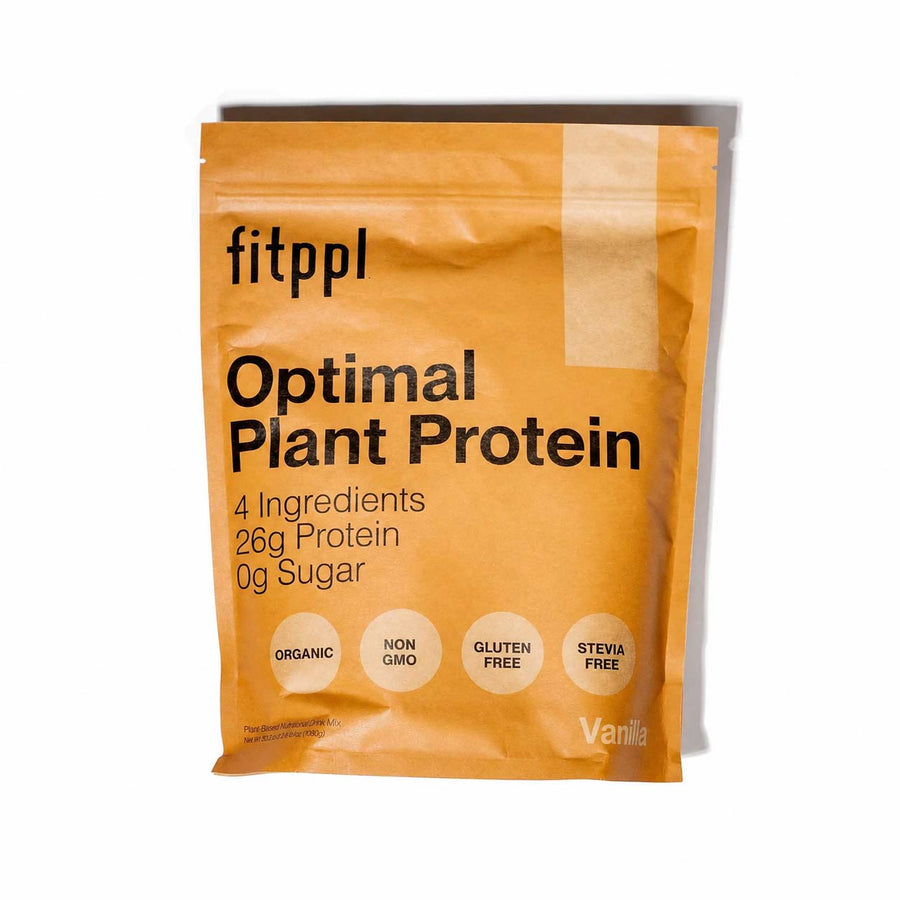
Optimal Plant Protein
Four organic ingredients, 26g of protein, and heavy metal results you can read for yourself.
-
Optimal Plant Protein
Our simplest formula: organic pea and brown rice protein, vanilla and monk fruit.
- Protein
- 26g per serving
- Protein from
- Organic pea and brown rice
- Sweetened with
- Organic monk fruit
- Sugar
- 0g
- Certified
- Organic, Non-GMO, gluten-free
Best for: the most protein from the fewest ingredients.
$69.99$59.49 with subscribe & save
Shop now
From people who read the label
4.9 average from 95 reviews of Optimal Plant Protein. Quotes from verified buyers.
-
Truly Clean and Delicious
“My boyfriend and I were trying to find plant protein with a good amino acid profile, and didn't have all the extra unhealthy additives. We love how smooth, clean and delicious this Optimal Plant Protein Powder is. It doesn't leave a gross after taste or a thick film in your mouth like other protein powders. We are extremely happy with this find, and will continue to purchase this product. Thank you!”
Danika L.Verified buyer · Optimal Plant Protein -
Pure health in a bag
“Pure ingredients, organic, good taste, sustainable packaging, fast service. What's not to love?!”
MaryAnn O.Verified buyer · Optimal Plant Protein -
Best protein I've had!
“This stuff is delicious, clean and packed with protein. I am a believer!”
Christopher C.Verified buyer · Optimal Plant Protein
What is the best protein powder without heavy metals?
No protein powder is completely free of heavy metals. Lead, cadmium, arsenic and mercury are in the soil, water and air that crops grow in, so small amounts end up in most foods, protein powders included. In Consumer Reports' 2025 testing, 22 of 23 protein powders and shakes had detectable lead.1
So the useful question is which powder has the lowest amounts, and how you'd know. The best choice is one that:
- Publishes its results. Per serving, for all four metals, from an independent lab, with a test date.
- Stays well under supplement limits. USP <2232>, the U.S. Pharmacopeia's standard for supplements, sets daily limits of 5 mcg of lead, 5 mcg of cadmium, 15 mcg of inorganic arsenic and 15 mcg of mercury.3
- Gets retested. Metals vary from batch to batch, so one old test isn't enough.
- Fits how much you use. Results are per serving. Two scoops a day means twice the amount.
Here's Optimal Plant Protein's latest independent test, from September 2026:6
| Per 36g serving | Optimal Plant Protein | USP <2232> daily limit | Share of the limit |
|---|---|---|---|
| Lead | 1.01 mcg | 5 mcg | About 20% |
| Cadmium | 3.35 mcg | 5 mcg | About 67% |
| Arsenic | Not detected | 15 mcg (inorganic) | Not detected |
| Mercury | 0.25 mcg | 15 mcg | Under 2% |
To be straight with you: Optimal isn't the lowest-lead protein powder that's ever been tested, and its cadmium is higher than most. Consumer Reports uses a stricter benchmark for lead, 0.5 mcg a day, and Optimal's 1.01 mcg is above it.15 We publish every number so you can compare it for yourself instead of taking our word for it.
Is there lead in all protein powder?
Nearly all of it. Consumer Reports detected lead in 22 of the 23 products it tested in 2025, across plant, dairy and beef proteins.1 "Lead-free" isn't a realistic promise for any protein powder. A published number is.
Why does protein powder have lead?
Plants take up lead and other metals from the soil and water they grow in. Protein powder concentrates the protein from crops like peas and rice into a small scoop, and the metals come along with it. Processing may add some too.1
That's why plant protein tends to test higher. In Consumer Reports' testing, plant-based powders averaged about nine times the lead of dairy-based powders and about twice that of beef-based ones.2
Which protein powder has the least heavy metals?
On average, dairy proteins like whey tested lowest for lead in Consumer Reports' work, though half of the dairy products still had enough lead that it advised against using them every day.12 Among plant proteins, the lowest results were around half a microgram per serving.
If you avoid dairy, compare plant powders on their published results. We line up ours next to the brands Consumer Reports tested, including where ours is higher, in our guide to lead in protein powder.
How much lead is too much?
There's no federal limit for heavy metals in protein powder, and the FDA doesn't test or approve supplements before they're sold.28 These are the benchmarks people use:
| Benchmark | What it covers | Lead |
|---|---|---|
| California Proposition 65 | The level Consumer Reports uses as its level of concern for one day | 0.5 mcg a day |
| USP <2232> | Heavy metals in dietary supplements. Following it is voluntary. | 5 mcg a day |
| FDA interim reference levels | Lead from all the food you eat in a day | 2.2 mcg a day for children; 8.8 mcg a day for women of childbearing age |
Sources: Consumer Reports and California's Office of Environmental Health Hazard Assessment,15 the U.S. Pharmacopeia3 and the FDA.4 The FDA's levels cover your whole diet, so a protein shake counts toward that daily total along with everything else you eat.
Should you stop using protein powder?
Most people don't need to. Even the highest-lead products in Consumer Reports' testing were far below the amounts that cause immediate harm. The concern is repeated exposure over time, because lead builds up in the body.2 A few habits keep your exposure down:
- Stick to one serving a day unless you need more, and count every scoop.
- Get protein from food too, like beans, lentils, tofu, eggs, dairy and fish.
- Choose brands that publish results, so you know what you're getting.
- Take extra care with kids and pregnancy. Consumer Reports says children and pregnant people are the most vulnerable to lead.1 If you're pregnant, ask your doctor before using any protein supplement.
What about cadmium, arsenic and mercury?
Lead gets the headlines, but it's one of four metals worth checking:
- Cadmium is common in grains, leafy greens and other plant foods, and it builds up in the kidneys with repeated exposure.7 In plant protein it's often a bigger number than lead. Ours is too.
- Arsenic is higher in rice than in most crops, which is why rice protein deserves a look. Optimal's latest test found no detectable arsenic.6
- Mercury is mostly a concern with fish. Optimal's 0.25 mcg is under 2% of the USP limit.6
How do you read a heavy metal test report?
- Look for all four metals. A report that shows only lead leaves out part of the picture.
- Check the units. Micrograms (mcg) per serving are easiest to compare with daily limits. Labs often report parts per billion (ppb), which is micrograms per kilogram of powder. Multiply ppb by the serving size in grams and divide by 1,000 to get micrograms per serving.
- Compare serving sizes. A 90g serving and a 30g scoop aren't the same amount of powder.
- Know what "not detected" means. The amount was below what the lab could measure, not necessarily zero.
- Check the date and the lab. A recent result from an independent, accredited lab tells you more than a general claim that a product is "tested."
Does organic protein powder have fewer heavy metals?
Not necessarily. USDA Organic rules cover how crops are grown, like no synthetic pesticides or GMOs. They don't set limits for metals that are naturally in the soil.9 Optimal is USDA Organic, and it still has measurable lead and cadmium. Organic and tested are two different things, and it's worth looking for both.
How often do we test?
We test Optimal Plant Protein with Light Labs, an independent lab accredited to ISO/IEC 17025, about every six months. Results are judged against USP <2232> and NSF/ANSI 173, and the full report is on the product page and our third-party testing page.6 When a new test comes in, we post the new numbers, whether they go up or down.
Why we make Optimal this way
- Four ingredients. Organic pea protein, organic brown rice protein, organic vanilla and organic monk fruit. Fewer ingredients means fewer places for contaminants to come from.
- Published results. Every number from our latest heavy metal test, per serving, with the date.
- 26g of protein. One scoop (36g) covers a good share of most people's daily needs, so most people only need one a day.10
- 0g of sugar. Sweetened only with organic monk fruit. No stevia, gums or natural flavors.
- Certified. USDA Organic, Non-GMO Project Verified and certified gluten-free.
If you want the lowest possible lead above everything else, a dairy protein like whey will usually test lower than plant protein.2 If you want plant protein with numbers you can check, Optimal is what we make.
Sources
- Consumer Reports. Protein powders and shakes contain high levels of lead. October 2025, updated January 2026.
- NPR. A study found lead in popular protein powders. Here's why you shouldn't panic. October 2025.
- U.S. Pharmacopeia. General Chapter <2232> Elemental Contaminants in Dietary Supplements.
- U.S. Food and Drug Administration. Lead in food and foodwares: interim reference levels.
- California Office of Environmental Health Hazard Assessment. Proposition 65: maximum allowable dose level for lead.
- Light Labs. Optimal Plant Protein heavy metals report. September 2026.
- Agency for Toxic Substances and Disease Registry. ToxFAQs: Cadmium.
- U.S. Food and Drug Administration. Questions and answers on dietary supplements.
- U.S. Department of Agriculture, Agricultural Marketing Service. Organic labeling standards.
- fitppl. Optimal Plant Protein Nutrition Facts.
Questions, answered
Quick answers about how we test Optimal.
Is fitppl protein powder free of heavy metals?
No protein powder is completely free of them, ours included. In its latest independent test (September 2026), a 36g serving of Optimal had 1.01 mcg of lead, 3.35 mcg of cadmium, 0.25 mcg of mercury and no detectable arsenic. All four are under the USP <2232> daily limits for supplements.
Where can I see Optimal's lab results?
The full Light Labs report is on the Optimal product page. Tap See the report next to Lab-verified by Light Labs. Our third-party testing page has the results too.
How often is Optimal tested?
About every six months, by Light Labs, an independent lab accredited to ISO/IEC 17025. We post the newest results when they come in.
Is brown rice protein high in arsenic?
Rice can take up more arsenic than most crops, so it's worth checking. Optimal's latest test found no detectable arsenic per serving.
Is one scoop a day okay?
One serving of Optimal has about 20% of the USP <2232> daily limit for lead and about two-thirds of the limit for cadmium. If you use more than one scoop a day, the amounts add up, so we suggest getting the rest of your protein from food.
Is Daily Greens & Reds tested too?
Yes, by the same lab, with results on its product page. Its latest test (September 2026) found 3.59 mcg of lead, 0.25 mcg of cadmium, 2.26 mcg of arsenic and no detectable mercury per 12g scoop.