Greens vs Reds Powder: What's the Difference?
The main difference between greens and reds powders is in the ingredients they include or emphasize. Greens blends often include grasses, leafy plants and algae. Reds blends tend to feature fruits and...

The main difference between greens and reds powders is in the ingredients they include or emphasize. Greens blends often include grasses, leafy plants and algae. Reds blends tend to feature fruits and other colorful plant ingredients, although the two categories can overlap.
Use those names as a starting point, then turn the bag around to see the label. It tells you what the formula actually contains, how much you get per serving, and whether it fits your preferences. For a closer look at what these blends can offer, see our guide to how greens and reds superfood powders benefit your health.
Quick Comparison
| Type | Usually built around | Common examples |
|---|---|---|
| Greens | Grasses, leafy plants and algae | Wheatgrass, spirulina, chlorella, moringa |
| Reds | Fruits and other colorful plants | Camu camu, acerola, elderberry, pomegranate |
| Combined | Ingredients from both groups in one scoop | Varies by formula, so check the full label |
A reds product may also include ingredients you'd associate with greens. A combined formula can simplify the choice if you want both ingredient types, but the full label still matters.
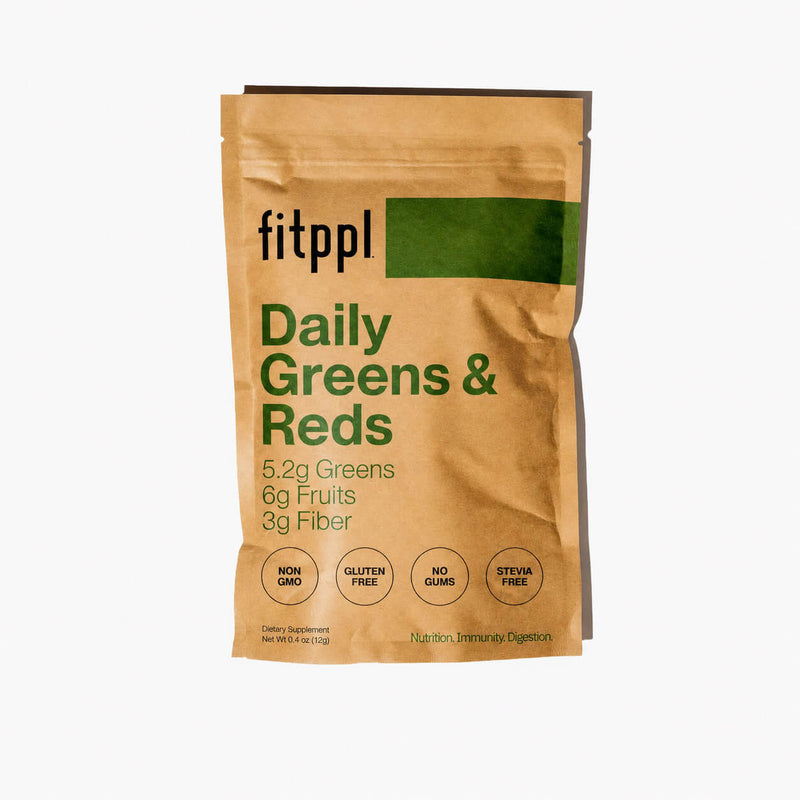
Our Daily Greens & Reds has a green blend of grasses, algae and leaves, alongside a red blend of six fruit ingredients.1 You can see the full label on our greens powder page.
What's in a Greens Powder?
As the name implies, a greens powder is a blend built around green plant ingredients. Our green blend, for example, includes wheatgrass, alfalfa grass, spirulina, chlorella, moringa leaf and nettle leaf. Other formulas can use different ingredients or add fruits, sweeteners and other components.1
That variation makes the label more useful than the category name. Check the ingredients and declared nutrients rather than assuming every greens powder supplies the same vitamins, minerals or fiber. A drink looking green doesn't tell you much on its own.
What's in a Reds Powder?
Reds powders tend to emphasize fruits and other colorful plant ingredients. In our red blend, those are camu camu, amla, elderberry, acerola, pomegranate and cranberry juice powder. The name gives you a rough idea of the ingredient direction rather than a universal recipe.1
Just as with greens, we wouldn't assume every reds powder contains beetroot, tastes like berries, or has the same vitamin C content. If a particular ingredient is your reason for buying, check that it's actually there before comparing anything else.
What Each Type Tends to Bring
Because the two categories lean on different plant groups, they tend to bring different things to your routine, even though the exact nutrients depend on the formula.
Reds lean on fruit. Many reds powders use vitamin C-rich fruits. Camu camu, for example, is known for its vitamin C and polyphenols.3 That can be handy, since only about 1 in 8 U.S. adults eats the recommended amount of fruit.4
Greens lean on grasses, leaves and algae. That makes them a common pick for people who want more green plant ingredients in their day. Vegetables are even more of a gap than fruit: only about 1 in 10 U.S. adults eats the recommended amount.4
Neither type replaces the whole fruits and vegetables behind those numbers. A powder can add plant ingredients to your routine, but supplements can't replace the variety of foods a healthy diet needs.2
Compare the Formula, Then Choose the Category
Here's what to look for when shopping for your next greens or reds powder.
Ingredients and disclosed amounts
Start with what's included and what amounts the label discloses. Our label gives a total of 6g for the red blend and 5.2g for the green blend. It lists the ingredients within each group but doesn't give an individual amount for every ingredient.1
So you can see the blend totals, but you can't calculate the dose of each fruit or plant from that information. An ingredient appearing on a label doesn't, by itself, mean the whole formula will produce a benefit discussed in research about that ingredient.
For example, a proprietary blend of five ingredients with a total of 10g doesn't mean each ingredient weighs about 2g. What it does tell you is that the first ingredient listed makes up the most weight in the blend. The rest might be present in much smaller amounts, but the blend will still declare a total of 10g.
Fiber and other declared nutrients
If fiber is part of your reason for choosing a powder, look at the grams per serving. Our Daily Greens & Reds lists 3g of dietary fiber per 12g scoop. The word "greens" or "reds" alone doesn't tell you the fiber content of another product.1
Use the same approach for any vitamin or mineral you want from your greens and reds supplement. Check the Supplement Facts label and the serving size together. We wouldn't pick a formula just because it lists more plant ingredients than the one beside it.
Sweeteners and flavor preferences
If you're avoiding added sugar or certain sweeteners, check what makes the powder sweet. A fruit-based blend isn't automatically unsweetened.
Our formula includes monk fruit extract, a zero-calorie sweetener from fruit, and lists 0g added sugar. Those are two separate label facts. It also contains no stevia, gums or natural flavors.1
Compare those choices with what you like to drink. If you're trying to avoid a particular sweetener, checking the ingredient list before buying should be your first move.
How it fits your routine
Convenience matters most when the product fits something you'll actually do, or a habit you already have. Think about where you'll use the powder, whether that's a drink with water, a smoothie, or food you already make. Check the mixing directions before assuming two powders use the same scoop or amount of liquid.
Our guide to the best time to drink greens and reds covers timing, and 5 Easy Ways to Use Red Superfood Powder gives practical options beyond a glass of water. You don't need to build an elaborate routine around a scoop.
Can You Take Greens and Reds Together?
Some greens and reds products combine both in one serving, including ours. That gives you one ingredient label and one set of serving directions to review. It also makes clear which blend amounts are included, rather than leaving you to work out a combination of separate products.
If you want to use two separate supplements, read both full labels and check for overlapping ingredients and nutrients. Follow their directions, and ask a clinician or pharmacist about your combination if you take medication or have a health condition.
The NIH notes that supplements can interact with medicines and that safety depends on the ingredients, preparation and amount used.2
Which One Makes Sense for You?
Choose a greens-focused formula if its plant ingredients match what you want to add to your routine. A reds-focused formula may be the better choice if you prefer its fruit ingredients and flavor. A combined formula is another option if you want both groups in one product. In the end, the better choice depends on what works for your lifestyle and health goals.
If you're trying to address a specific nutritional deficiency or health concern, get professional advice about that concern.
Either way, keep fruits and vegetables in your diet. Supplements can't replace the variety of foods that matter for a healthy eating routine. We wouldn't treat a scoop as permission to stop eating produce, or claim it equals a particular number of servings.2
What fitppl Daily Greens & Reds Contains
Our formula combines:
- 12 organic plant ingredients, six in the red blend and six in the green blend
- 6g of red blend, 5.2g of green blend and 3g of dietary fiber in one level 12g scoop
- monk fruit extract for sweetness, with 0g added sugar
If you want both ingredient groups in one scoop, our Daily Greens & Reds combines them with 3g of fiber per serving. See the full label to compare it with the formulas you're considering.1
Sources 4
Numbers in the article link to these sources.
- fitppl. Daily Greens & Reds product page and Supplement Facts, reviewed October 14, 2026.
- NIH Office of Dietary Supplements. Dietary Supplements: What You Need to Know.
- Maqsood S, Arshad MT, Ikram A, et al. Nutritional composition, pharmacological properties, and industrial applications of Myrciaria dubia: an undiscovered superfruit. Food Science & Nutrition, 2025.
- Lee SH, Moore LV, Park S, Harris DM, Blanck HM. Adults meeting fruit and vegetable intake recommendations, United States, 2019. MMWR, 2022.