The Complete Guide to Buying Vegan Protein Powder
Buying vegan protein powder for the first time? Whether you've been vegan for years or you're just eating fewer animal products, a good plant protein makes it a lot easier to hit...

Buying vegan protein powder for the first time? Whether you've been vegan for years or you're just eating fewer animal products, a good plant protein makes it a lot easier to hit your protein goals.
It can feel intimidating with so many options on the shelf. It doesn't have to be. Vegan protein powder works like any other protein powder, minus the animal ingredients, and you look for most of the same things. Here's your checklist.
What to look for in a vegan protein powder
1. Enough protein per serving
Start with the nutrition panel. The International Society of Sports Nutrition suggests about 20 to 40 grams of protein per serving to support muscle building and recovery, along with about 0.7 to 3 grams of the amino acid leucine.2 If a scoop has much less than 20 grams, you'll need more of it to get the same benefit.
2. A balanced protein source
Plant proteins differ in their amino acid makeup. Many are lower in lysine or methionine than animal proteins, but combining them can close the gap.1 That's why pea and brown rice are so often blended: pea is lower in methionine, rice is lower in lysine, and together they balance out. Soy is also a complete protein on its own.
You don't need a long list of protein sources. Two that complement each other, like pea and rice, do the job.
3. A short, clean ingredient list
Protein powders can range from a handful of ingredients to a long list of sweeteners, gums, thickeners and oils. Read the full label. Look for:
- Little or no added sugar
- Ingredients you recognize
- Sweeteners you're comfortable with (some people prefer to avoid stevia or erythritol)
- Certifications that matter to you, like organic, non-GMO or certified gluten-free
4. Testing and transparency
In the US, the FDA doesn't approve dietary supplements for safety or labeling before they're sold. Companies are responsible for making sure their products are safe and accurately labeled.5 Heavy metals have been found in some protein powders. A 2020 risk assessment concluded typical intake was unlikely to cause harm,6 but a brand that tests its products and shares its standards gives you extra peace of mind.
5. Allergens
Plant proteins avoid dairy, but check for soy, gluten, nuts or anything else you're sensitive to.
6. A flavor you'll actually drink
Love chocolate? Get chocolate. Into berries? Go berry. The best protein powder is the one you'll use every day. Many people assume vegan protein won't taste as good. Just like any protein powder, some are too sweet, chalky or gritty, and others are great. If the first one doesn't click, try another.
Does vegan protein work as well as whey?
When you get enough of it, yes. In a 12-week trial, people who took pea protein with resistance training gained muscle thickness on par with those taking whey.3 A review comparing soy to animal protein found no difference in gains in muscle mass or strength.4
Use customer reviews wisely
Reviews are a great way to learn about taste, texture and how a powder mixes, and to compare price per serving across brands. Read a mix of positive and negative reviews to get a balanced picture, and use the nutrition label, not reviews, to judge protein content and ingredients. For a side-by-side look at five popular options, see our guide to the best plant-based protein powder.
Buying vegan protein powder for the first time
Keep it simple: enough protein per serving, a balanced protein source, a clean ingredient list, a brand that tests, and a flavor you enjoy.
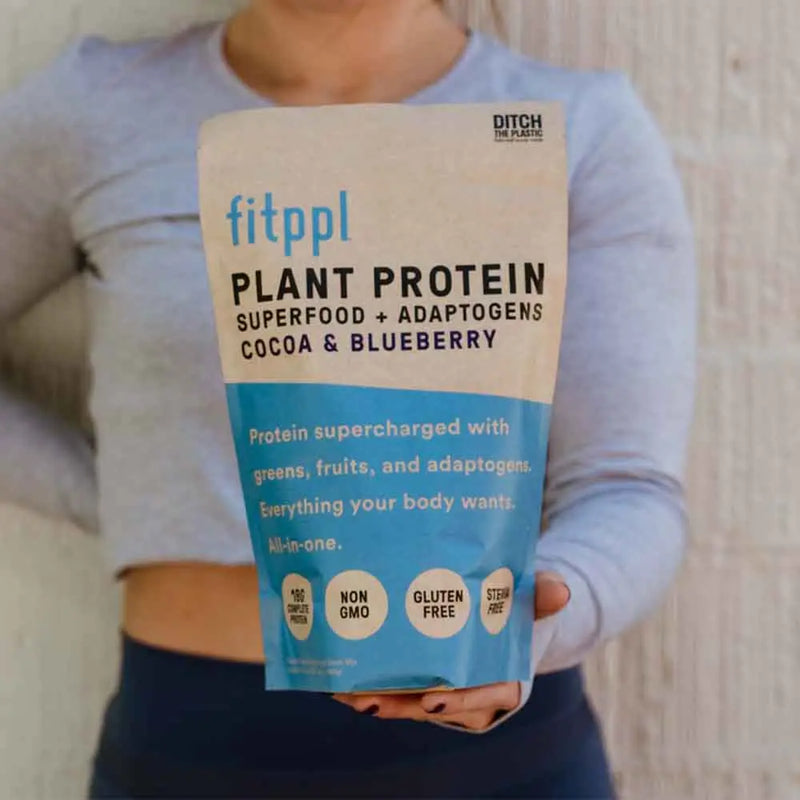
Our Optimal Plant Protein has 26 grams of organic pea and brown rice protein, 0 grams of sugar and just 4 ingredients, with no dairy, soy, stevia or seed oils. Browse all fitppl proteins to find your fit.
Sources 6
Numbers in the article link to these sources.
- Gorissen SHM, et al. Protein content and amino acid composition of commercially available plant-based protein isolates. Amino Acids, 2018.
- Jäger R, et al. International Society of Sports Nutrition position stand: protein and exercise. JISSN, 2017.
- Babault N, et al. Pea proteins oral supplementation promotes muscle thickness gains during resistance training: a double-blind, randomized, placebo-controlled clinical trial vs. whey protein. JISSN, 2015.
- Messina M, et al. No difference between the effects of supplementing with soy protein versus animal protein on gains in muscle mass and strength in response to resistance exercise. IJSNEM, 2018.
- US Food and Drug Administration. Facts about dietary supplements.
- Bandara SB, Towle KM, Monnot AD. A human health risk assessment of heavy metal ingestion among consumers of protein powder supplements. Toxicology Reports, 2020.