How Much Protein Do Older Adults Need? A Guide for 65+
How much protein adults over 65 need by body weight and health, how to spread it across meals, kidney cautions, and where protein powder can help.

Protein needs don't shrink as you get older. If anything, they grow. Expert groups that focus on aging recommend more protein for adults over 65 than the standard baseline. At the same time, appetite often gets smaller, which makes the target harder to hit.
Below is how much protein older adults need, by body weight and health, how to spread it across the day, and where protein powder can help. We make Optimal Plant Protein, so keep that in mind as you read. Every number comes from a study, a guideline or a label, with sources at the end. If you have a health condition, especially kidney disease, check with your doctor before changing how much protein you eat.
The short answer
- Healthy adults over 65: at least 1.0 to 1.2g of protein per kilogram of body weight a day. That's the recommendation from two expert groups, PROT-AGE and ESPEN.23 It's higher than the 0.8g baseline for all adults.1
- With an acute or chronic illness: often 1.2 to 1.5g per kilogram. Your doctor should set this one.23
- With kidney disease: usually less, not more. Guidelines for chronic kidney disease recommend about 0.8g per kilogram.8
- Spread it out. About 25 to 30g at each meal works better than most of it at dinner.24
Why older adults need more protein
Two things change with age.
Muscles respond less to protein. In a study comparing healthy older and younger men, the older men needed about 0.40g of protein per kilogram of body weight in one meal to get the most muscle-building response, compared with about 0.24g per kilogram for the younger men.4 Researchers call this anabolic resistance. In practice, a portion of protein that's plenty in your 20s may fall short in your 70s.
Muscle and strength are harder to keep. Sarcopenia is the progressive loss of muscle strength and mass with age. It's linked to a higher likelihood of falls, fractures and physical disability.5 Enough protein, together with regular activity, is one of the main ways expert groups recommend protecting muscle as you age.23
How much protein do older adults need a day?
The general Recommended Dietary Allowance for adults is 0.8g per kilogram of body weight a day.1 For people over 65, the PROT-AGE study group and the European Society for Clinical Nutrition and Metabolism (ESPEN) both recommend more:23
- Healthy and active: at least 1.0 to 1.2g per kilogram a day. PROT-AGE advises 1.2g or more for older adults who exercise.2
- Acute or chronic illness: 1.2 to 1.5g per kilogram, and more with severe illness or injury, set by your care team.23
- Severe kidney disease, not on dialysis: the exception. These people may need to limit protein.2
Here's what those ranges look like in grams:
| Body weight | Healthy (1.0 to 1.2g/kg) | With illness (1.2 to 1.5g/kg) | Per meal (about 0.4g/kg) |
|---|---|---|---|
| 110 lb (50kg) | 50 to 60g | 60 to 75g | 20g |
| 130 lb (59kg) | 59 to 71g | 71 to 88g | 24g |
| 150 lb (68kg) | 68 to 82g | 82 to 102g | 27g |
| 170 lb (77kg) | 77 to 93g | 93 to 116g | 31g |
| 190 lb (86kg) | 86 to 103g | 103 to 129g | 34g |
| 210 lb (95kg) | 95 to 114g | 114 to 143g | 38g |
To find your own number, divide your weight in pounds by 2.2 to get kilograms, then multiply by the rate that fits you. The per-meal column uses the 0.4g per kilogram from the muscle study above.4
An example
Take an 80-year-old woman who weighs 130 lb (59kg) and is generally healthy. At 1.0 to 1.2g per kilogram, she'd aim for about 59 to 71g of protein a day, or roughly 20 to 25g at each of three meals. If she has an illness and her doctor recommends 1.2 to 1.5g per kilogram, that rises to about 71 to 88g.
For a quick sense of how most adults compare, our guide to how much protein powder per day has the same table for younger and more active people.
Spread protein across the day
If most of your protein comes at dinner, try moving some of it earlier. For older adults, PROT-AGE suggests about 25 to 30g at each meal.2 That fits the muscle study too: the larger per-meal amount older muscles need is hard to reach if breakfast and lunch are light.4
Breakfast is often the easiest place to add protein. Eggs, Greek yogurt, cottage cheese and a protein shake all work, and none of them take long to make.
When appetite gets smaller
Reduced appetite in older age is common enough to have a name: anorexia of aging. Harvard Health notes it's common but not a normal part of aging, and lists contributors such as changes in smell and taste, slower digestion, dental problems, medications that cause dry mouth, and loneliness. A sudden or large drop in appetite is worth raising with a doctor.7
It also suggests eating more often, adding protein to every meal and snack, and staying active.7 This is where protein powder earns its place. A scoop adds a lot of protein without much volume, and you can stir it into things you're already eating:
- Oatmeal or yogurt. Stir it in after cooking.
- Coffee or a latte. Blend it so it mixes smoothly.
- A small smoothie. Half a banana, a handful of berries and milk or water. Our protein shake recipes have more ideas.
Protein powder isn't a meal replacement, and food should still provide most of your protein. Harvard Health makes the same point: powder can help, but it shouldn't be your only source.7
Protein works best with movement
Protein alone doesn't build or keep muscle. ESPEN recommends daily physical activity or exercise, including resistance training, for all older people.3 The CDC recommends that adults 65 and older get at least 150 minutes of moderate activity a week, at least two days of muscle-strengthening activities, and activities that improve balance.6
Muscle-strengthening doesn't have to mean a gym. The CDC's examples include working with resistance bands, exercises that use your body weight, digging in a garden and some yoga postures. For balance, it lists things like walking backward and standing on one leg.6 If you're new to exercise, ask your doctor what's safe to start with.
Protein and your kidneys
For healthy adults, a review of 28 studies found that higher-protein diets didn't harm kidney function.14 But kidney disease changes the advice:
- KDIGO, the international kidney guideline group, recommends about 0.8g of protein per kilogram a day for adults with chronic kidney disease stages 3 to 5 who aren't on dialysis, and avoiding more than 1.3g per kilogram for those at risk of their kidney disease getting worse.8
- PROT-AGE makes the same exception: older adults with severe kidney disease who aren't on dialysis may need to limit protein.2
- The National Institute of Diabetes and Digestive and Kidney Diseases recommends working with a dietitian on how much protein is right if you have kidney disease.9
If you have kidney disease, or don't know your kidney function, talk to your doctor before adding protein powder. For other safety questions, see is protein powder bad for you?
What to check on a protein powder label
- Protein per serving. 20 to 30g gets most older adults close to the per-meal amounts above in one scoop.24
- Sugar and sweeteners. Look at added sugar and at which sweeteners are used. This matters more if you're watching your blood sugar.
- A short ingredient list. Fewer ingredients means fewer things to look up, and fewer things to check with your doctor or pharmacist.
- Published heavy metal results. Plants absorb heavy metals from soil, and Consumer Reports found in 2025 that two-thirds of the protein powders and shakes it tested had high lead levels in a single serving.12 Look for brands that publish third-party results per serving.
- How many servings a day. Heavy metal limits such as USP <2232> are set per day, not per scoop.1011 Multiply a powder's results by the number of scoops you'll actually take. More in our guide to lead in protein powder.
Why we make Optimal this way
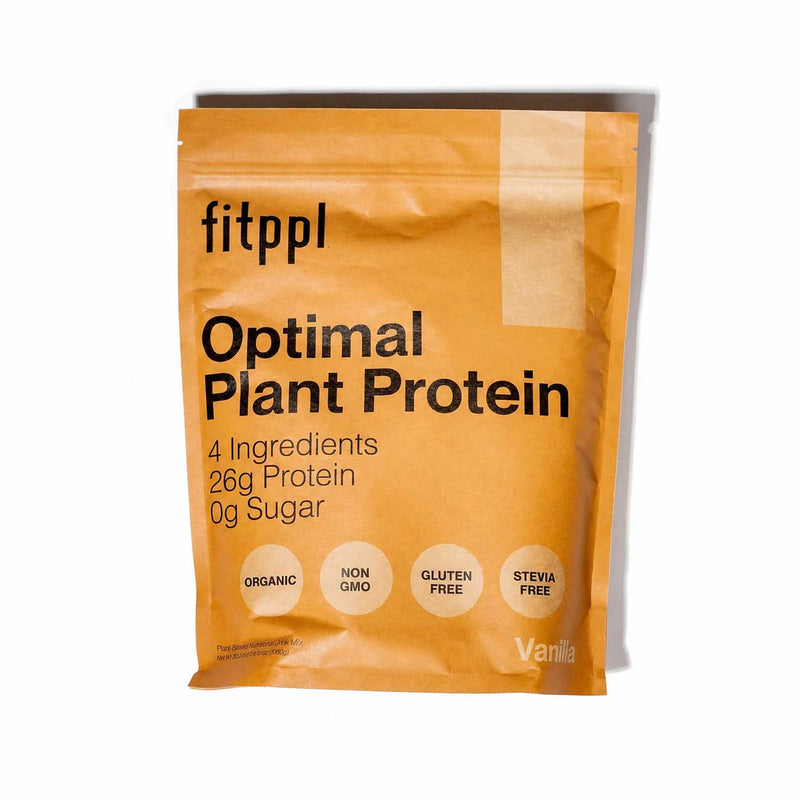
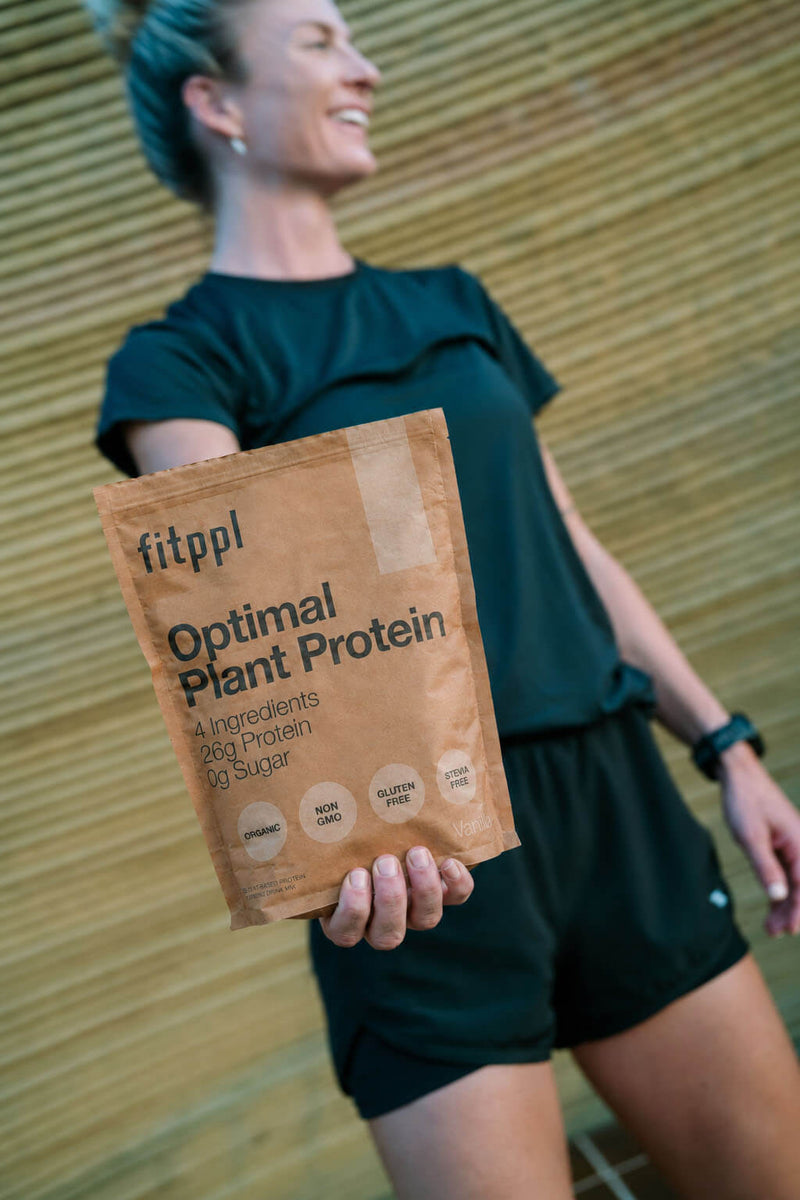
Optimal Plant Protein has 26g of protein per serving (36g), 150 calories and 0g of sugar. It's made with four ingredients: organic pea protein, organic brown rice protein, organic vanilla and organic monk fruit. There are no gums, natural flavors, dairy or soy.13
It's tested for heavy metals by Light Labs, an independent lab, and the results are published on the product page. In September 2026, one serving had 1.01 mcg of lead and 3.35 mcg of cadmium. USP <2232> sets daily limits of 5 mcg for each.1013 That's why we suggest one scoop of Optimal a day, with the rest of your protein from food. Two scoops would be over the cadmium limit.
One scoop covers about the per-meal amount above for most older adults, and it mixes into oatmeal, coffee or a smoothie. If you're comparing options, see our guide to the best protein powder for seniors.
Here's what one verified buyer wrote, word for word:
"I love this protein powder! It has clean ingredients and makes it easy for me to hit my protein intake for the day. I love it so much that I have two bags auto-shipped every month. One for me and one for my dad."
Nancy, verified buyer, Optimal Plant Protein
If weight is part of the picture too, see our guide to protein powder for weight loss.
The bottom line
Most healthy adults over 65 should aim for at least 1.0 to 1.2g of protein per kilogram of body weight a day, spread across meals at about 25 to 30g each, alongside regular activity that includes strength training. Food should do most of the work. Protein powder can help on days when appetite or time gets in the way. If you have kidney disease or another health condition, let your doctor set your target.
Sources 14
Numbers in the article link to these sources.
- Institute of Medicine. Dietary Reference Intakes for Energy, Carbohydrate, Fiber, Fat, Fatty Acids, Cholesterol, Protein, and Amino Acids. National Academies Press, 2005.
- Bauer J, et al. Evidence-based recommendations for optimal dietary protein intake in older people: a position paper from the PROT-AGE Study Group. Journal of the American Medical Directors Association, 2013.
- Deutz NEP, et al. Protein intake and exercise for optimal muscle function with aging: recommendations from the ESPEN Expert Group. Clinical Nutrition, 2014.
- Moore DR, et al. Protein ingestion to stimulate myofibrillar protein synthesis requires greater relative protein intakes in healthy older versus younger men. Journals of Gerontology: Series A, 2015.
- Cruz-Jentoft AJ, et al. Sarcopenia: revised European consensus on definition and diagnosis. Age and Ageing, 2019.
- Centers for Disease Control and Prevention. Older Adult Activity: An Overview, and What Counts as Physical Activity for Older Adults.
- Salamon M. When aging steals hunger. Harvard Health Publishing, March 2025.
- Kidney Disease: Improving Global Outcomes (KDIGO) CKD Work Group. KDIGO 2024 Clinical Practice Guideline for the Evaluation and Management of Chronic Kidney Disease. Kidney International, 2024.
- National Institute of Diabetes and Digestive and Kidney Diseases. Eating right for chronic kidney disease. Reviewed January 2025.
- USP General Chapter <2232> Elemental Contaminants in Dietary Supplements: daily limits for lead, cadmium, arsenic and mercury, as summarized by BSCG.
- U.S. Pharmacopeia. General Chapter <2232> Elemental Contaminants in Dietary Supplements (USP 38–NF 33): permitted daily exposures and maximum daily intake.
- Consumer Reports. Investigation finds two-thirds of protein powders and shakes tested contained high levels of lead in a single serving. October 2025.
- fitppl. Optimal Plant Protein Nutrition Facts and Light Labs heavy metal report (tested September 7, 2026).
- Devries MC, et al. Changes in kidney function do not differ between healthy adults consuming higher- compared with lower- or normal-protein diets: a systematic review and meta-analysis. Journal of Nutrition, 2018, as summarized by McMaster University.