

26g of protein in one easy serving
Best Protein Powder for Seniors
Older muscles need more protein at each meal. Each serving (36g) of Optimal gives you 26g, with 0g of sugar and just four organic ingredients.
4.9 average from 95 reviews

Per serving (36g)
Optimal Plant Protein
From the Nutrition Facts label.
Optimal Plant Protein
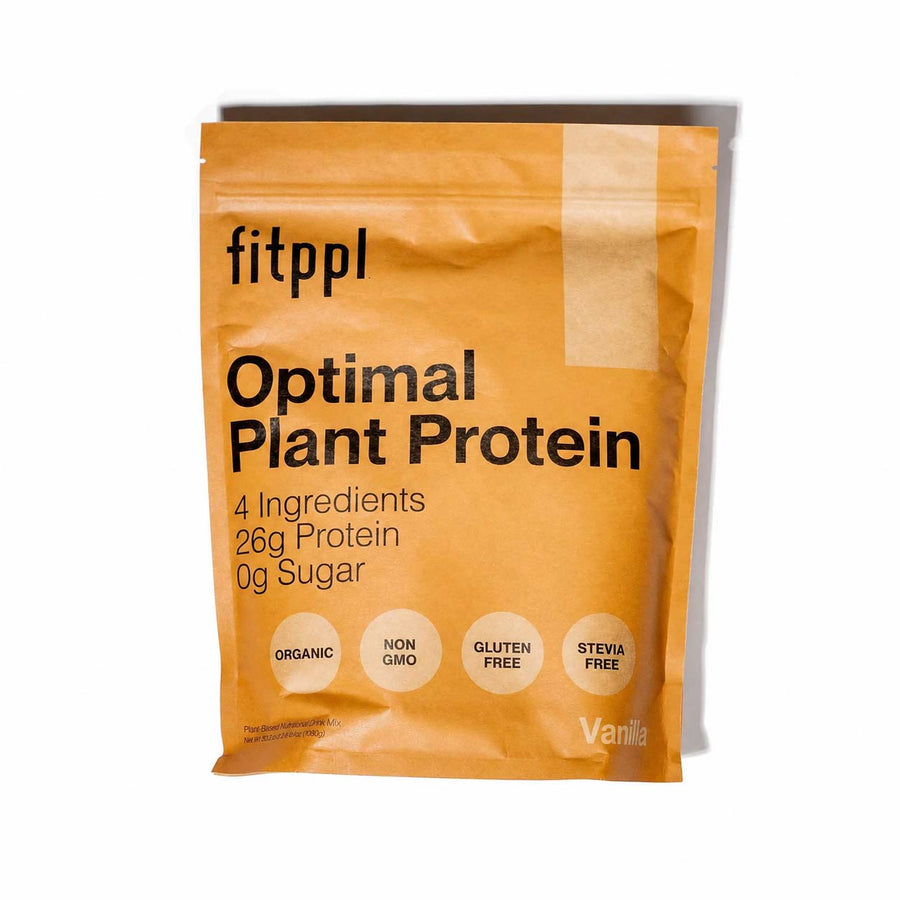
Organic pea and brown rice protein, vanilla and monk fruit. Mixes in water, milk, oatmeal or coffee.
-
Optimal Plant Protein
Our simplest formula: organic pea and brown rice protein, vanilla and monk fruit.
- Protein
- 26g per serving
- Protein from
- Organic pea and brown rice
- Sweetened with
- Organic monk fruit
- Sugar
- 0g
- Certified
- Organic, Non-GMO, gluten-free
Best for: the most protein from the fewest ingredients.
$69.99$59.49 with subscribe & save
Shop now
From long-time customers
4.9 average from 95 reviews of Optimal Plant Protein. Quotes from verified buyers.
-
Love this product
“I've tried so many plant-based proteins over the year. This one has the best ingredients and I love that the bag and spoon are compostable. I've been using various fitppl products for at least 5 years now.”
Melinda H.Verified buyer · Optimal Plant Protein -
High quality protein
“After a long search I finally found the high quality clean protein that I was looking for. This will be my to go brand for years and I only hope they start stocking their products at the big grocery stores soon.”
David S.Verified buyer · Optimal Plant Protein -
Amazing!
“I've been a fitppl customer for over 2 years now and I was thrilled to see that they came out with a higher protein option! Not only that, this one tastes amazing!”
Pervez S.Verified buyer · Optimal Plant Protein
What is the best protein powder for seniors?
The best protein powder for seniors gives you a full dose of protein in one easy serving, without added sugar, and mixes into foods and drinks you already enjoy. As we age, our muscles respond less to protein, so older adults need more of it at each meal to get the same benefit.3 At the same time, appetite often shrinks. A protein powder helps close that gap.
What to look for:
- 20g to 30g of protein per serving. An international expert group suggests about 25g to 30g of protein per meal for older adults.1
- Little or no sugar. Especially important for people managing blood sugar or weight.
- Easy to mix. A powder that dissolves in water, milk or oatmeal is easier to use every day.
- Easy on the stomach. No lactose or sugar alcohols if those bother you.
- A short, readable label. Fewer ingredients make it easier to check with your doctor or pharmacist.
Here's Optimal Plant Protein, straight from the label:7
| Per serving (36g) | Optimal Plant Protein |
|---|---|
| Protein | 26g |
| Calories | 150 |
| Sugar | 0g |
| Carbs | 5g, with 1g of fiber |
| Iron | 8.4mg |
| Ingredients | 4: organic pea protein, organic brown rice protein, organic vanilla, organic monk fruit |
| Free of | Dairy, soy, gluten, gums and sugar alcohols |
Should 70-year-olds take protein powder?
Many can benefit. After about age 50, people gradually lose muscle and strength, and when the loss becomes significant it's called sarcopenia.2 Low muscle strength is linked to falls, frailty and losing independence. Eating enough protein and staying active are the two main ways to slow it down.12
The trouble is that many older adults don't eat enough protein, especially at breakfast. A protein powder is a simple way to fix that. It isn't required if you already eat plenty of protein-rich food, and it isn't a substitute for meals.
How much protein do seniors need?
The official minimum for all adults is 0.8g of protein per kilogram of body weight a day.5 Many experts think that's too low for older adults. The PROT-AGE Study Group, an international panel, recommends:1
- At least 1.0g to 1.2g per kilogram a day for healthy adults over 65.
- 1.2g to 1.5g per kilogram a day for older adults with acute or chronic illness.
- More for those who exercise.
| Body weight | 1.0g to 1.2g per kg a day |
|---|---|
| 130 lb (59kg) | About 59g to 71g |
| 160 lb (73kg) | About 73g to 87g |
| 190 lb (86kg) | About 86g to 104g |
People with serious kidney disease are the exception. If you have chronic kidney disease, your protein target may be lower, so ask your doctor first.61
Why do older adults need more protein per meal?
Aging muscles become less sensitive to protein, a change researchers call anabolic resistance. In one study, older men needed about 0.4g of protein per kilogram in a meal to get the maximum muscle-building response, compared with about 0.24g per kilogram for younger men.3 That's why spreading protein evenly across the day, with a good amount at each meal, matters more as you age.
A typical pattern is a light breakfast, a modest lunch and a big dinner. Adding a 26g serving of Optimal to breakfast is one of the easiest ways to even that out.7
What is the best protein for seniors over 70?
The best protein is the one you'll eat regularly. Good sources for older adults include:
- Eggs. Soft, quick and easy to chew.
- Greek yogurt and cottage cheese. High in protein, soft and versatile.
- Fish. Tender, and many types add omega-3 fats.
- Beans, lentils and tofu. Inexpensive plant proteins with fiber.
- Protein powder. Useful when appetite, chewing or cooking is a challenge.
Plant protein powders like pea and brown rice are a good fit for people who don't tolerate dairy, which becomes more common as people age.
Is plant protein good for older adults?
Yes, with one thing to keep in mind. Plant proteins tend to contain a little less leucine, an amino acid that helps switch on muscle building, than dairy proteins like whey. Blending plant proteins, such as pea with brown rice, and getting a full serving at each meal helps make up the difference. The bigger factor for most older adults is simply eating enough total protein, spread through the day.1
Plant proteins also come without lactose, which is a plus for the many adults who find dairy harder to digest with age.
What is the best protein supplement for senior citizens?
Look for a plain protein powder with a short ingredient list rather than a long blend. A simple powder is easier to fit around medications and health conditions, and you control what you mix it with.
Protein powders are dietary supplements, and the FDA doesn't approve them before they're sold.8 That's why it's worth choosing a brand that publishes its testing. We share our heavy metal results from Light Labs, an independent lab, in our guide to lead in protein powder.
Which is better for seniors, Boost or Ensure?
Boost and Ensure are ready-to-drink nutrition shakes. They're designed to deliver calories, protein, vitamins and minerals in one bottle, which is helpful when someone is underweight or not eating enough overall. Both brands make several versions with different amounts of protein, sugar and calories, so the best choice depends on the specific product and the person's needs. A doctor or dietitian can help pick one.
A protein powder is different. It's mostly protein, without the added carbs, sugar and vitamin blend. That makes it a better fit for people who eat reasonably well but fall short on protein, or who want to avoid added sugar. Some families use both: a nutrition shake when appetite is very poor, and a protein powder in everyday foods.
Does protein powder help seniors build muscle?
Protein works best alongside exercise. The PROT-AGE group recommends daily activity, including resistance exercise when possible.1 A large review found that protein supplements added to resistance training increased gains in muscle and strength in adults, though the effect was smaller in older people, which is one more reason to get enough protein at each meal.4
Strength training for older adults can be simple: sit-to-stands from a chair, wall push-ups, light dumbbells or resistance bands. Talk to your doctor before starting a new exercise routine.
How can seniors with a small appetite get more protein?
- Eat protein first. Start the meal with the eggs, fish or beans, before filling up on sides.
- Use half servings. Half a serving of protein powder twice a day can be easier than one full shake.
- Fortify foods you already eat. Stir powder into oatmeal, yogurt, mashed sweet potato or soup after cooking.
- Drink some of your protein. Liquids are often easier than a full plate when appetite is low.
- Keep easy options on hand. Cheese, yogurt, nut butter and hard-boiled eggs make quick snacks.
Unplanned weight loss, a drop in strength or slow recovery from illness are worth mentioning to your doctor. They can be signs that you're not getting enough to eat overall.
Is protein powder safe for older adults?
For most healthy older adults, a normal serving of a simple protein powder is safe. A few things to keep in mind:
- Kidney disease. Ask your doctor before increasing protein.6
- Medications. Most plain protein powders don't interact with medications, but blends with herbs or extras can. A four-ingredient powder is easy to check.
- Iron. Optimal has 8.4mg of iron per serving, from the pea and rice protein. Adults over 50 need 8mg a day, so if you take an iron supplement too, ask your doctor about your total.9
- Fluids. Drink enough water through the day, especially if you increase protein.
Can protein powder help older adults lose weight safely?
When older adults lose weight, some of what they lose is muscle, and muscle is harder to rebuild later in life. Getting enough protein and doing resistance exercise helps protect it.1 A protein shake can make a smaller meal more filling and keep protein up while calories come down. For more, see the best protein powder for weight loss. If you're losing weight without trying, talk to your doctor first.
How can seniors add protein powder to food?
A shake isn't the only way. Optimal is vanilla and mixes easily, so you can:
- Stir it into oatmeal or cream of wheat after cooking.
- Mix it into yogurt, applesauce or pudding.
- Blend it into a fruit smoothie. See the best protein powder for smoothies.
- Add it to coffee or a latte. See the best protein powder for coffee.
- Use it in pancakes or muffins. See the best protein powder for baking.
For a simple shake, mix one serving (36g) in 10oz to 12oz of water or milk.7 Half servings work well too, if a full shake feels like too much.
When should seniors take protein powder?
Breakfast is often the best time, because it's usually the lowest-protein meal of the day. After exercise or a walk is another good choice. If you're aiming for 25g to 30g at each meal, a serving of Optimal at breakfast and protein-rich lunches and dinners gets you there.1
For more detail by body weight, see how much protein powder per day. If dairy or certain sweeteners bother you, see the best protein powder for sensitive stomach.
Why we make Optimal this way
- 26g of protein per serving (36g). Right in the 25g to 30g per meal range.7
- 0g of sugar. Sweetened only with organic monk fruit.
- Four ingredients. Organic pea protein, organic brown rice protein, organic vanilla and organic monk fruit.
- Easy on most stomachs. No dairy, gums, soy or sugar alcohols.
- Tested and certified. We publish our heavy metal results from Light Labs. USDA Organic, Non-GMO Project Verified and certified gluten-free.
This page is general information, not medical advice. If you have a health condition or take medications, check with your doctor before adding a supplement.
Sources
- Bauer J, et al. Evidence-based recommendations for optimal dietary protein intake in older people: a position paper from the PROT-AGE Study Group. Journal of the American Medical Directors Association, 2013.
- Cruz-Jentoft AJ, et al. Sarcopenia: revised European consensus on definition and diagnosis. Age and Ageing, 2019.
- Moore DR, et al. Protein ingestion to stimulate myofibrillar protein synthesis requires greater relative protein intakes in healthy older versus younger men. Journals of Gerontology Series A, 2015.
- Morton RW, et al. A systematic review, meta-analysis and meta-regression of the effect of protein supplementation on resistance training-induced gains in muscle mass and strength in healthy adults. British Journal of Sports Medicine, 2018.
- Institute of Medicine. Dietary Reference Intakes for Energy, Carbohydrate, Fiber, Fat, Fatty Acids, Cholesterol, Protein, and Amino Acids. National Academies Press, 2005.
- Kidney Disease: Improving Global Outcomes (KDIGO) CKD Work Group. KDIGO 2024 clinical practice guideline for the evaluation and management of chronic kidney disease. Kidney International, 2024.
- fitppl. Optimal Plant Protein Nutrition Facts and directions.
- U.S. Food and Drug Administration. Questions and answers on dietary supplements.
- National Institutes of Health, Office of Dietary Supplements. Iron: fact sheet for health professionals.
Questions, answered
Quick answers about Optimal.
Why is Optimal a good fit for older adults?
One serving (36g) gives you 26g of protein, right in the 25g to 30g per meal range suggested for older adults. It has 0g of sugar, four organic ingredients and no dairy, gums or sugar alcohols.
Is Optimal easy to mix?
Yes. Shake one serving in 10oz to 12oz of water or milk, or stir it into oatmeal, yogurt or applesauce. For hot foods, stir it in after cooking with a splash of liquid.
Does Optimal have added vitamins?
No. Optimal is a simple protein powder, not a nutrition shake, so it has no added vitamin blend. It naturally contains 8.4mg of iron per serving from the pea and brown rice protein.
Will Optimal interact with my medications?
Optimal has only four ingredients and no herbs or extracts, which makes it easy to check. If you take medications or have a health condition, show the label to your doctor or pharmacist before adding it.
Is Optimal OK for people with kidney disease?
People with chronic kidney disease may need to limit protein. Check with your doctor before adding any protein powder.
How long does a bag last?
Each bag has 30 servings, so one serving a day lasts a month. Half a serving a day lasts about two months.