

26g of protein, 150 calories, 0g sugar
Best Protein Powder for Weight Loss
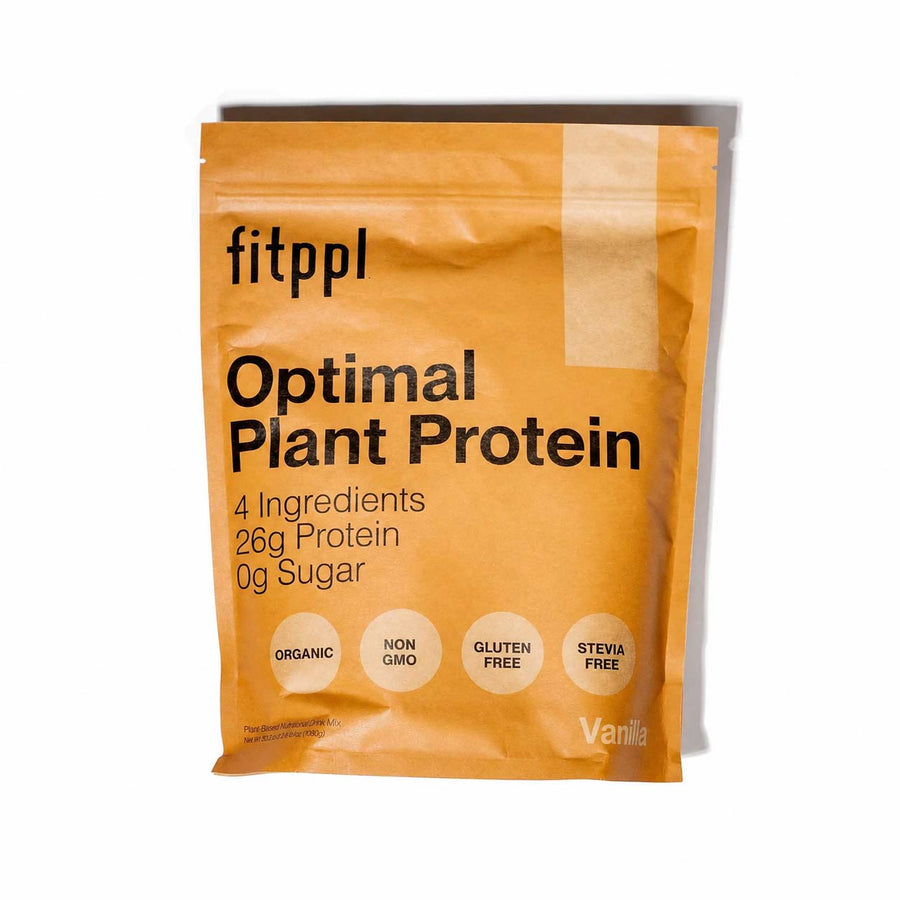
Four-ingredient organic plant protein that gets most of its calories from protein. Each serving (36g) of Optimal has 26g of protein, 150 calories and 0g of sugar.
4.9 average from 95 reviews

Per serving (36g)
Optimal Plant Protein
From the Nutrition Facts label.
Optimal Plant Protein
The most protein from the fewest ingredients: organic pea and brown rice protein, vanilla and monk fruit.
-
Optimal Plant Protein
Our simplest formula: organic pea and brown rice protein, vanilla and monk fruit.
- Protein
- 26g per serving
- Protein from
- Organic pea and brown rice
- Sweetened with
- Organic monk fruit
- Sugar
- 0g
- Certified
- Organic, Non-GMO, gluten-free
Best for: the most protein from the fewest ingredients.
$69.99$59.49 with subscribe & save
Shop now
From people who stay full on it
4.9 average from 95 reviews of Optimal Plant Protein. Quotes from verified buyers.
-
PERFECTION!
“I mix this with the Superfood + Adaptogens, blueberries, & unsweetened vanilla almond milk each morning after my workout. It is the perfect post workout drink that keeps me full and energized until lunch. What a wonderful clean product with excellent customer service!!”
Angela P.Verified buyer · Optimal Plant Protein -
Best of the best!
“This is what I have been looking for forever. Until now, no protein powder has had the combination of high protein, extremely low carb, plant based and DELICIOUS!!! FITPPL just gained a lifelong customer!”
Dustin K.Verified buyer · Optimal Plant Protein -
Amazing Protein Powder
“I have a monthly subscription for the vanilla. I have it every morning and it keeps me fueled!”
Marcia G.Verified buyer · Optimal Plant Protein
What is the best protein powder for weight loss?
The best protein powder for weight loss is the one that gives you the most protein for the fewest calories, with little or no added sugar, and that you'll actually drink every day. There's no special "fat-burning" protein. What helps is protein itself: it keeps you full and helps you hold on to muscle while you eat less.12
So instead of looking for a weight loss claim on the front of the bag, flip it over and check four things:
- Protein per calorie. Divide grams of protein by calories. Around 15g to 20g of protein per 100 calories means most of the calories come from protein.
- Sugar. Aim for 0g to 2g of added sugar. Sugar adds calories without making you fuller.
- Ingredients. A short list you recognize is easier to trust than a long blend of "fat burners" and stimulants, which you don't need.
- Taste. The powder you enjoy is the one you'll keep using. A cheaper powder you can't stand isn't a bargain.
Here's how Optimal Plant Protein measures up, straight from the label:16
| Per serving (36g) | Optimal Plant Protein |
|---|---|
| Protein | 26g |
| Calories | 150 |
| Protein per 100 calories | About 17g |
| Sugar | 0g |
| Carbs | 5g, with 1g of fiber |
| Sweetened with | Organic monk fruit |
| Ingredients | 4: organic pea protein, organic brown rice protein, organic vanilla, organic monk fruit |
About 70% of Optimal's calories come from protein, and there's nothing in the bag you don't need.
Can you lose weight using protein powder?
Protein powder can make weight loss easier, but it doesn't cause weight loss on its own. You lose weight when you use more calories than you take in.12 Protein helps you stick to that in three ways:
- It keeps you full. A review in the American Journal of Clinical Nutrition found that higher-protein diets, around 1.2g to 1.6g of protein per kilogram of body weight a day, led to more fullness, more fat loss and better preservation of lean mass during calorie restriction.1
- It protects muscle. In a review of 24 trials with the same calories, higher-protein diets led to slightly more weight and fat loss, less loss of lean mass and a smaller drop in resting metabolism.2 Strength training makes the effect bigger: in a four-week study, young men on a large calorie deficit who trained hard and ate 2.4g of protein per kilogram a day gained lean mass and lost more fat than those eating 1.2g per kilogram.3
- It takes more energy to digest than carbohydrates or fat. The difference is small, so treat it as a bonus.4
Protein powder is just a convenient way to get more protein. If it replaces a snack or part of a meal, it helps. If you add shakes on top of everything you already eat, you're adding calories. For the full research, read protein powder for weight loss: what the research says.
Should you drink protein shakes while trying to lose weight?
If you struggle to get enough protein from food, or you tend to grab a sugary snack mid-afternoon, a shake is an easy fix. A scoop of Optimal mixed with water or unsweetened almond milk is a 26g protein snack for around 150 to 200 calories.16
Shakes are less useful if you already eat plenty of protein, or if your shakes turn into 600-calorie smoothies. A scoop with a banana, two tablespoons of peanut butter and a cup of oat milk can easily pass 500 calories. That's a fine meal, but it isn't a light snack.
Is plant-based protein powder good for weight loss?
Yes. What matters for weight loss is how much protein you get and how many calories come with it, not whether it comes from dairy or plants. In an 8-week study of adults doing high-intensity training, the group taking 24g of pea protein and the group taking 24g of whey had similar results on every measure, including strength and body composition.7 It was a small pilot study, so treat it as one data point, not the final word.
Plant protein can be just as filling, too. In one small study, 20g of pea protein taken 30 minutes before a meal reduced how much people ate at that meal, similar to casein and more than whey.8 It's one short-term study, so treat it as a hint, not a rule.
A few practical reasons people choose plant protein when cutting calories:
- No dairy. If whey leaves you bloated, a dairy-free powder removes lactose from the equation. See our dairy-free protein powders.
- Blends cover the gaps. Pea protein is low in methionine and rice protein is low in lysine, so blending them gives a more complete amino acid profile. Optimal is a pea and rice blend. Our guide to protein quality scores explains how this works.
- Fewer additives. Many plant powders skip the gums and fillers some people prefer to avoid. Optimal has no gums.
We go deeper in is vegan protein powder good for weight loss?
Which protein powder is best for belly fat?
No protein powder targets belly fat. You can't choose where your body loses fat from, and that includes exercise: in a six-week study, people who did abdominal exercises lost no more belly fat than a group that didn't.10
Belly fat comes off the same way fat comes off everywhere else: a steady calorie deficit, enough protein and regular exercise.12 Be skeptical of any product that promises to "target" belly fat. The FDA doesn't approve dietary supplements or their claims before they're sold.13
How much protein do you need to lose weight?
The baseline recommendation for adults is 0.8g of protein per kilogram of body weight a day.6 That's the minimum to avoid deficiency. Weight loss trials that showed benefits used about 1.2g to 1.6g per kilogram,1 and the International Society of Sports Nutrition suggests 1.4g to 2.0g per kilogram for active people.5
| Body weight | Baseline (0.8g/kg) | Weight loss range (1.2 to 1.6g/kg) |
|---|---|---|
| 130 lb (59kg) | 47g | 71g to 94g |
| 150 lb (68kg) | 54g | 82g to 109g |
| 180 lb (82kg) | 65g | 98g to 131g |
| 200 lb (91kg) | 73g | 109g to 145g |
| 230 lb (104kg) | 83g | 125g to 167g |
People often ask how much protein they need to lose 20 pounds. Your protein target depends on your body weight, not on how much you want to lose. The amount you lose comes down to your calorie deficit and how long you keep it up. The CDC notes that people who lose about 1 to 2 pounds a week are more likely to keep it off,12 so 20 pounds is roughly a 10- to 20-week goal.
Most of your protein should still come from food. One shake of Optimal adds 26g. To turn your target into scoops, see how much protein powder per day. If you have kidney disease or another condition that affects protein needs, talk to your doctor first.
How many protein shakes a day should you drink to lose weight?
For most people, one shake a day is plenty. Use it to fill the gap between the protein you get from food and your target, not as a reason to drink shakes all day.
There are two reasons to keep it to one or two. First, every shake adds calories, so more shakes can work against your deficit. Second, plant proteins carry small amounts of heavy metals from the soil they grow in, and the amounts add up with each scoop.15 We publish our own test results, including where ours are higher than other brands, in our guide to lead in protein powder.
When should you drink a protein shake for weight loss?
Timing matters much less than the total amount of protein you get in a day. A meta-analysis on protein timing found that once total protein intake was accounted for, timing made little difference to muscle gains.9
So pick the time that helps you eat less overall:
- Morning: a protein breakfast can keep you full until lunch, which helps if you usually snack mid-morning.
- Afternoon: a shake in place of an afternoon snack is one of the easiest swaps.
- After a workout: convenient if you train, though there's no need to rush to drink it.
- Before a meal: one small study found pea protein 30 minutes before a meal reduced how much people ate.8
Morning or night both work. Choose based on when you're most likely to overeat. More in when to take protein powder.
What is the 30/30/30 rule for weight loss?
The 30/30/30 rule means eating 30g of protein within 30 minutes of waking up, then doing 30 minutes of low-intensity cardio. It comes from Tim Ferriss's book The 4-Hour Body and went viral on TikTok. A Cleveland Clinic dietitian notes it hasn't been studied, so there's no direct evidence that the rule itself works.14
The parts of it are sensible. A protein breakfast can keep you full, and daily movement helps. There's nothing special about the number 30 or the 30-minute window, though. If you want to try it, one serving of Optimal has 26g of protein,16 so a shake plus a little protein from food gets you there.
Can you replace meals with protein shakes?
Swapping one meal a day for a shake can work. A meta-analysis found that diets using meal replacements led to more weight loss after one year than other diets.11 But those studies used products designed to replace a meal, and they replaced some meals, not all of them.
A scoop of protein powder on its own isn't a full meal. It's mostly protein, with little fiber, fat or the range of vitamins and minerals you'd get from food. To turn a shake into a meal:
- Add fruit or a handful of spinach for fiber and nutrients.
- Add a spoonful of nut butter, chia or flax for fat that keeps you full.
- Add oats if it's replacing breakfast.
- Count the calories so the meal still fits your plan.
Our protein shake recipes include lighter options.
What happens if you only drink protein shakes for two weeks? We don't recommend it. You'd miss the fiber, fats and nutrients from food, and very low-calorie plans should be done with a doctor's guidance. Shakes work best as one part of a normal diet.
What are the side effects of protein powder?
For most healthy adults, protein powder in normal amounts is well tolerated. The most common issues are digestive and usually come from what's added, not the protein:
- Bloating or gas from lactose in dairy proteins, or from sugar alcohols like erythritol and gums used as thickeners.
- Heavy metals. Consumer Reports found lead in most of the protein powders it tested in 2025, with plant-based powders higher on average.15 Choose a brand that publishes per-serving results for lead, cadmium, arsenic and mercury.
- Extra calories if shakes are added on top of your usual meals.
Why do some doctors say no to protein powder? Usually for one of three reasons. Supplements aren't approved by the FDA before they're sold,13 so quality varies by brand. Some people, such as those with kidney disease, need to watch their protein intake. And most people can get enough protein from food. If you have a health condition, ask your doctor before adding a supplement. For a full rundown, see is protein powder bad for you?
What is the best protein powder for women's weight loss?
The same rules apply: plenty of protein per calorie, little added sugar and a short ingredient list. Protein needs are based on body weight, not sex, so use the table above. We compare five popular options in our best protein powder for women guide.
What if you're taking a GLP-1 medication?
Medications like semaglutide and tirzepatide reduce appetite, which can make it hard to eat enough protein while you lose weight. A protein shake can help when solid food feels like too much. Follow your prescriber's advice, and see our guide to protein powder on GLP-1 medications for what to look for.
Why we make Optimal this way
We built Optimal Plant Protein around the things that matter when you're cutting calories:
- A lot of protein for the calories. 26g of protein and 150 calories per serving (36g).16
- No sugar. 0g of sugar, sweetened only with organic monk fruit. No stevia, erythritol or artificial sweeteners like sucralose.
- Four ingredients. Organic pea protein, organic brown rice protein, organic vanilla and organic monk fruit. No gums, fillers, dairy or soy.
- Tested. We publish our heavy metal results from Light Labs, an independent lab.
- Certified. USDA Organic, Non-GMO Project Verified and certified gluten-free.
If you want to compare more options first, our best plant-based protein powder guide lines up five popular brands. Everyone's results are different, and no protein powder causes weight loss by itself.
Sources
- Leidy HJ, Clifton PM, Astrup A, et al. The role of protein in weight loss and maintenance. American Journal of Clinical Nutrition, 2015.
- Wycherley TP, Moran LJ, Clifton PM, Noakes M, Brinkworth GD. Effects of energy-restricted high-protein, low-fat compared with standard-protein, low-fat diets: a meta-analysis of randomized controlled trials. American Journal of Clinical Nutrition, 2012.
- Longland TM, et al. Higher compared with lower dietary protein during an energy deficit combined with intense exercise promotes greater lean mass gain and fat mass loss. American Journal of Clinical Nutrition, 2016.
- Westerterp KR. Diet induced thermogenesis. Nutrition & Metabolism, 2004.
- Jäger R, et al. International Society of Sports Nutrition position stand: protein and exercise. Journal of the International Society of Sports Nutrition, 2017.
- Institute of Medicine. Dietary Reference Intakes for Energy, Carbohydrate, Fiber, Fat, Fatty Acids, Cholesterol, Protein, and Amino Acids. National Academies Press, 2005.
- Banaszek A, et al. The effects of whey vs. pea protein on physical adaptations following 8 weeks of high-intensity functional training: a pilot study. Sports, 2019.
- Abou-Samra R, et al. Effect of different protein sources on satiation and short-term satiety when consumed as a starter. Nutrition Journal, 2011.
- Schoenfeld BJ, Aragon AA, Krieger JW. The effect of protein timing on muscle strength and hypertrophy: a meta-analysis. Journal of the International Society of Sports Nutrition, 2013.
- Vispute SS, Smith JD, LeCheminant JD, Hurley KS. The effect of abdominal exercise on abdominal fat. Journal of Strength and Conditioning Research, 2011.
- Astbury NM, Piernas C, Hartmann-Boyce J, et al. A systematic review and meta-analysis of the effectiveness of meal replacements for weight loss. Obesity Reviews, 2019.
- Centers for Disease Control and Prevention. Losing weight.
- U.S. Food and Drug Administration. Questions and answers on dietary supplements.
- Cleveland Clinic. What is the 30-30-30 diet? December 2024.
- Consumer Reports. Protein powders and shakes contain high levels of lead. October 2025, updated January 2026.
- fitppl. Optimal Plant Protein Nutrition Facts.
Questions, answered
Quick answers about Optimal.
Why is Optimal a good fit for weight loss?
Optimal gets most of its calories from protein: 26g of protein and 150 calories per serving (36g), or about 17g of protein per 100 calories. It has 0g of sugar and just four organic ingredients. It won't cause weight loss by itself, but it makes it easier to hit your protein target while eating fewer calories.
How many calories are in a serving?
Optimal has 150 calories per serving (36g). Mixed with water, that's the whole shake. Unsweetened almond milk adds roughly 30 to 40 calories a cup, and fruit, nut butter or oats add more, so count what you blend in.
Does it have sugar or artificial sweeteners?
No. Optimal has 0g of sugar and is sweetened only with organic monk fruit. There's no stevia, erythritol or artificial sweeteners like sucralose.
Can I use it as a meal replacement?
On its own, a scoop is mostly protein, so it isn't a complete meal. To make a shake a meal, blend in fruit or spinach for fiber, a spoonful of nut butter or chia for fat, and oats if it's breakfast. Our protein shake recipes have ideas.
Is it dairy-free?
Yes. Optimal is made from organic pea and brown rice protein, with no dairy, lactose or whey. It's also soy-free and certified gluten-free. See all of our dairy-free protein powders.
What if it isn't right for me?
You get your money back. Full refund, no catch, no timeline. We'll even refund the shipping. Here's how it works.